

Aalto university unveils quantum computer rare enough to turn heads worldwide
Aalto University in Espoo has launched AaltoQ20, a state-of-the-art quantum computer that joins a tiny global club of university-owned machines built for genuine quantum calculation rather than mere experimentation. The machine is now open for research and teaching.
Text: Martti Asikainen, 12.3.2026 | Photo by Matti Ahlgren/Aalto-yliopisto.
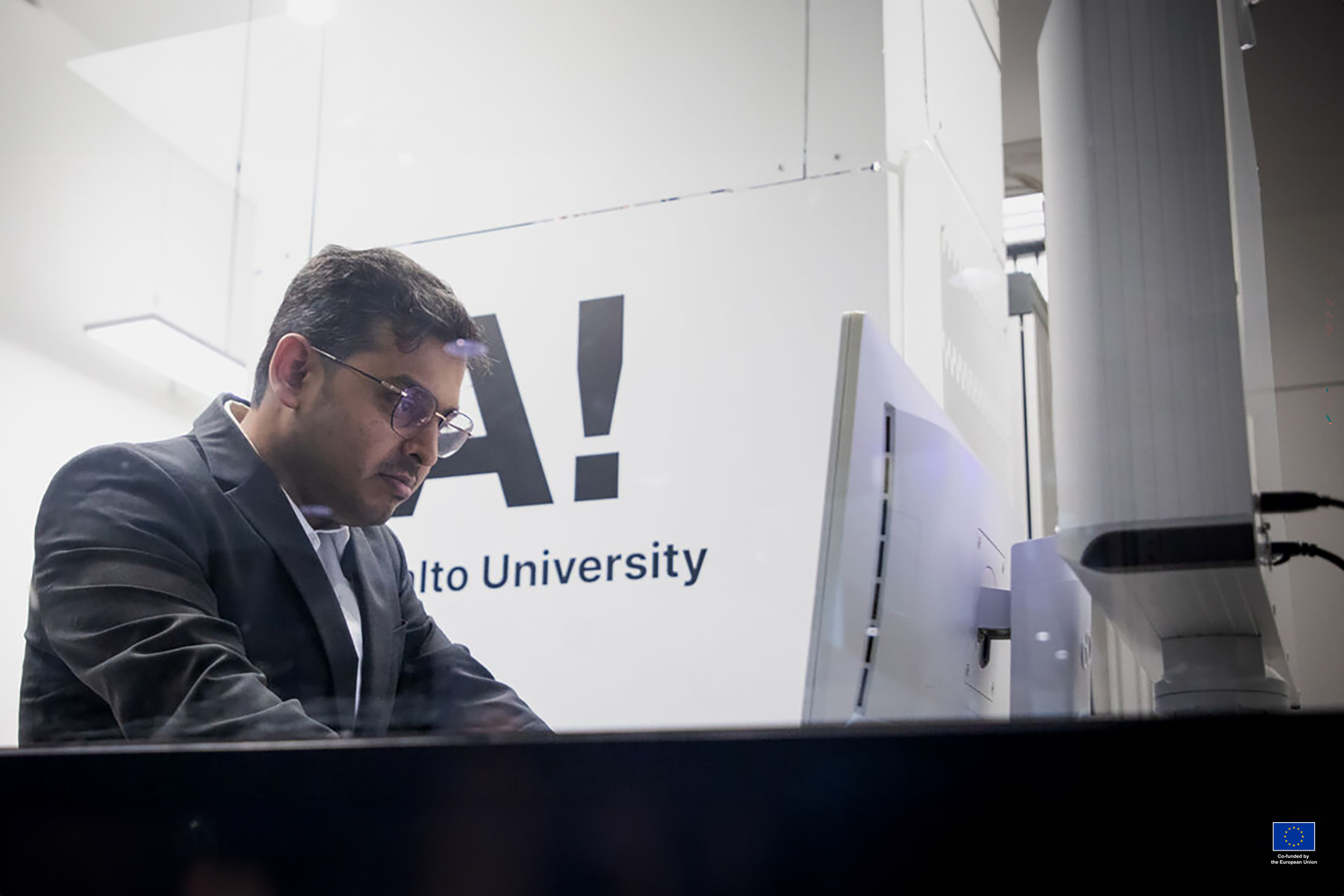
Finland has long punched above its weight in quantum technology, and Aalto University has now added fresh evidence of that with the unveiling of its own quantum computer.
The AaltoQ20, named after its 20 qubits, the fundamental units of quantum computing power, has been designed to allow researchers access at a deeper level than most commercial machines permit, down to the microwave pulses that govern the device’s behaviour. That degree of access, experts say, opens research avenues simply unavailable on standard commercial platforms.
The project was led by Professor Tapio Ala-Nissilä and Staff Scientist Suman Kundu from the Department of Applied Physics, and was constructed with research infrastructure funding from the Research Council of Finland between 2022 and 2025.
Components were supplied by two companies with roots at Aalto itself: quantum computing firm IQM and cryogenics manufacturer Bluefors.
A rare opportunity for students
What makes AaltoQ20 particularly striking is its role in education. Students on Aalto’s Quantum Technology major will be able to use the machine directly as part of their studies — something Ala-Nissilä describes as rare even by global standards.
Most universities that want to give students hands-on quantum experience must rely on cloud access to distant machines owned by commercial operators.
Ala-Nissilä draws a pointed distinction between AaltoQ20 and the handful of other university-owned quantum computers in Europe, noting that many such machines have been largely experimental in nature, built primarily to accumulate construction experience.
Q20, by contrast, was built expressly to perform quantum calculations.
Ownership as strategy
Chief executive and co-founder of IQM, Jan Goetz, argues that direct ownership carries strategic weight beyond mere convenience. When institutions own their quantum computers outright, their data, intellectual property, and expertise remain entirely in their hands — a consideration that carries increasing significance as quantum technology edges closer to commercial maturity.
The global market value of quantum technology is estimated to reach as much as 90 billion euros by 2035, by which point Finland’s quantum industry is projected to need around 3,000 new skilled workers, if the country is to maintain its leading position and meet the targets of its national quantum strategy.
Ala-Nissilä traces Aalto’s quantum expertise back to the founding of the Low Temperature Laboratory in the 1960s and a concerted push into nanotechnology at the turn of the millennium.
He offers a striking historical parallel: in the 1950s, Finnish researchers chose to build their own analogue computer rather than purchase one off the shelf, a decision that helped lay the technical foundations for Nokia’s rise three decades later. He believes the Q20 project could prove similarly consequential.
AaltoQ20 is Finland’s fourth quantum computer and forms part of FiQCI, the Finnish quantum computing infrastructure administered jointly by VTT, Aalto University and CSC – IT Centre for Science. Researchers can access the machine through FiQCI and the LUMI supercomputer.
Source: Aalto University