

Nebius plans €8.5 billion data centre in Lappeenranta, cementing Finland as its European base
The Amsterdam-based AI infrastructure firm, rebuilt from the remnants of Russia’s Yandex, has announced its largest European project as it races to deploy more than 3 gigawatts of computing capacity by the end of 2026. Nebius plans €8.5 billion data Centre in Lappeenranta, Finland.
Text by Martti Asikainen 14.4.2026 | Photo by Nebius
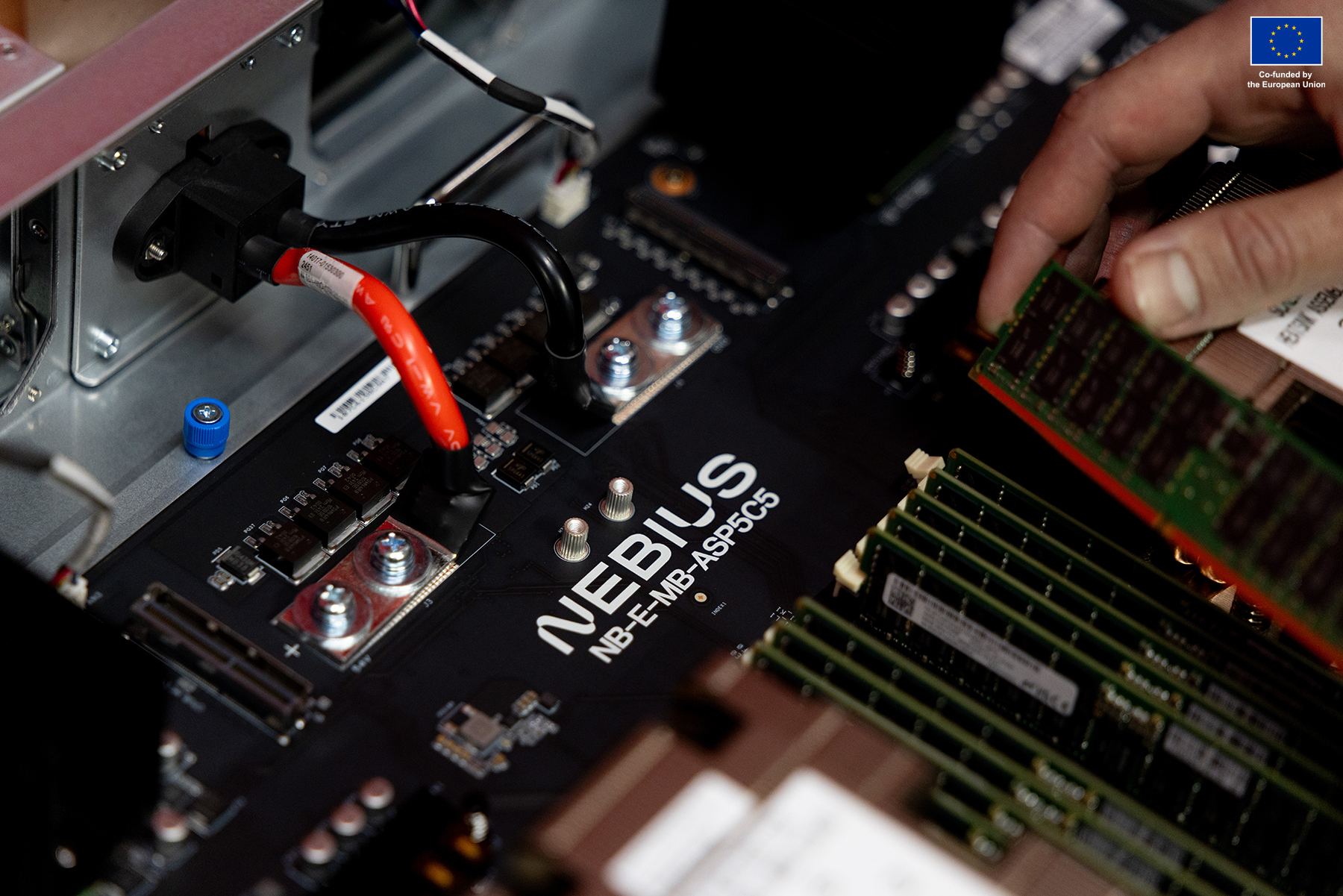
AI infrastructure company Nebius Group announced on 31 March a 310-megawatt data centre in Lappeenranta, southeastern Finland, valued at more than $10 billion, which would rank among the largest AI facilities in Europe. The site, Nebius’s tenth globally, is being built by Finnish developer Polarnode on a 100-acre industrial campus near Finland’s eastern border with Russia, with capacity due to come online in phases from 2027.
The announcement comes weeks after Nvidia committed a further €1.7 billion to Nebius in a private placement — its second major investment in the company — underscoring how rapidly the Amsterdam-listed firm has scaled since relaunching on Nasdaq in October 2024.
What the facility involves
The Lappeenranta site will be used to train AI models and run AI applications across Nebius’s cloud platform, and will not be dedicated to any single customer, according to the company. At full capacity, it will consume enough electricity to power up to half a million Finnish households, according to the announcement.
The project will be Nebius’s largest facility outside the United States, surpassing the 240-megawatt site the company announced near Lille, France, in February. Its largest currently operational European facility is also in Finland, a 75-megawatt site in Mäntsälä, which has served as Nebius’s European base since the company inherited it from Yandex.
Construction is expected to generate up to 700 jobs, with 100 permanent positions once the facility is operational. Lappeenranta Mayor Tuomo Sallinen cited the city’s universities as a source of technical talent and described the project as positioning Lappeenranta “at the forefront of Finland’s AI ecosystem.”
“The data centre is one of Finland’s largest infrastructure projects to date,” said Polarnode Chief Executive Mikko Toivanen in a statement, adding that it would support European data sovereignty.
Finland's appeal to companies
Nebius cited Finland’s combination of land availability, grid capacity, low energy prices, renewable electricity supply, and cold climate as decisive factors in the site selection. The country’s cool temperatures reduce cooling costs for high-density computing equipment — an increasingly significant operational expense as AI workloads grow more power-intensive.
“We think that the broader ecosystem environment is also very favourable here,” Chief Communications Officer Tom Blackwell told Reuters. Nebius has been building in Finland since its Yandex days and already operates the Mäntsälä facility, giving it established relationships with local grid and permitting authorities.
The Lappeenranta project will contribute to Nebius’s stated goal of securing more than 3 gigawatts of contracted power capacity by the end of this year, Chief Executive Arkady Volozh said in a statement. In the EMEA region, the company has already secured more than 750 megawatts of contracted power across its sites.
Succsessor to Yandex
Nebius is an unusual entity in the AI infrastructure market. The company is the successor to Yandex N.V., the Dutch-domiciled holding company of Russia’s largest technology group. After Russia’s invasion of Ukraine in February 2022 triggered EU sanctions on Yandex co-founder Volozh and suspended the company’s Nasdaq listing, a two-year restructuring followed.
In July 2024, the Russian domestic operations — search, ride-hailing, e-commerce — were sold to a consortium of local investors for €5.4 billion. The retained international assets, including the Finnish data centre and an engineering team of approximately 1,300 people, were renamed Nebius Group. Volozh, who had publicly condemned the invasion as “barbaric” and had his EU sanctions lifted in March 2024, returned as chief executive.
The company has since moved fast. Nvidia invested $700 million in a late 2024 funding round, followed by the €1.7 billion placement announced in March 2026. Microsoft signed a compute supply agreement in September 2025 worth at least €14.8 billion through 2031, with options that could raise the total to €16.5 billion; Meta followed in March 2026 with a deal worth up to €23 billion. Nebius reported fourth-quarter 2025 revenue of €193 million, representing 547% year-on-year growth, though it recorded a net loss of €212 million for the quarter, reflecting the capital demands of rapid infrastructure expansion.
Scale and risk
The scale of Nebius’s expansion — simultaneous projects across Finland, France, Norway, and the United States — reflects the pace at which demand for AI computing infrastructure is growing. The Lappeenranta announcement is part of a broader wave of investment flowing into Finland: Nscale, a London-based competitor valued at €12.4 billion after its own $1.7 billion raise in March, announced plans earlier this month for a data centre in Harjavalta, also with Fortum as site partner.
The $8.5 billion figure cited for Lappeenranta is an estimated project value, not a committed capital expenditure, and the facility will not begin serving customers until 2027 at the earliest. Nebius remains deeply loss-making — it spent €1.8 billion on capital expenditure in the fourth quarter of 2025 alone, and its valuation, which has surpassed €23.8 billion, rests substantially on contracted revenues that have yet to be recognised. The company’s origins in the Yandex restructuring also continue to draw scrutiny from some institutional investors, despite the formal separation from Russian operations and Volozh’s renunciation of Russian citizenship in February 2026.
The Reuters article by Anne Kauranen and Toby Sterling was used as a primary source for this article.