Finnish Rotomate raises €2.1 million to turn factory alert systems into full diagnostic reports
Rotomate, a two-year-old Helsinki company, has secured pre-seed funding led by Nordic industrial investor Kvanted to develop AI software that analyses machine data and generates maintenance recommendations for factory operators. Its current customers include steel producer SSAB, Metsä Group, and Aurubis
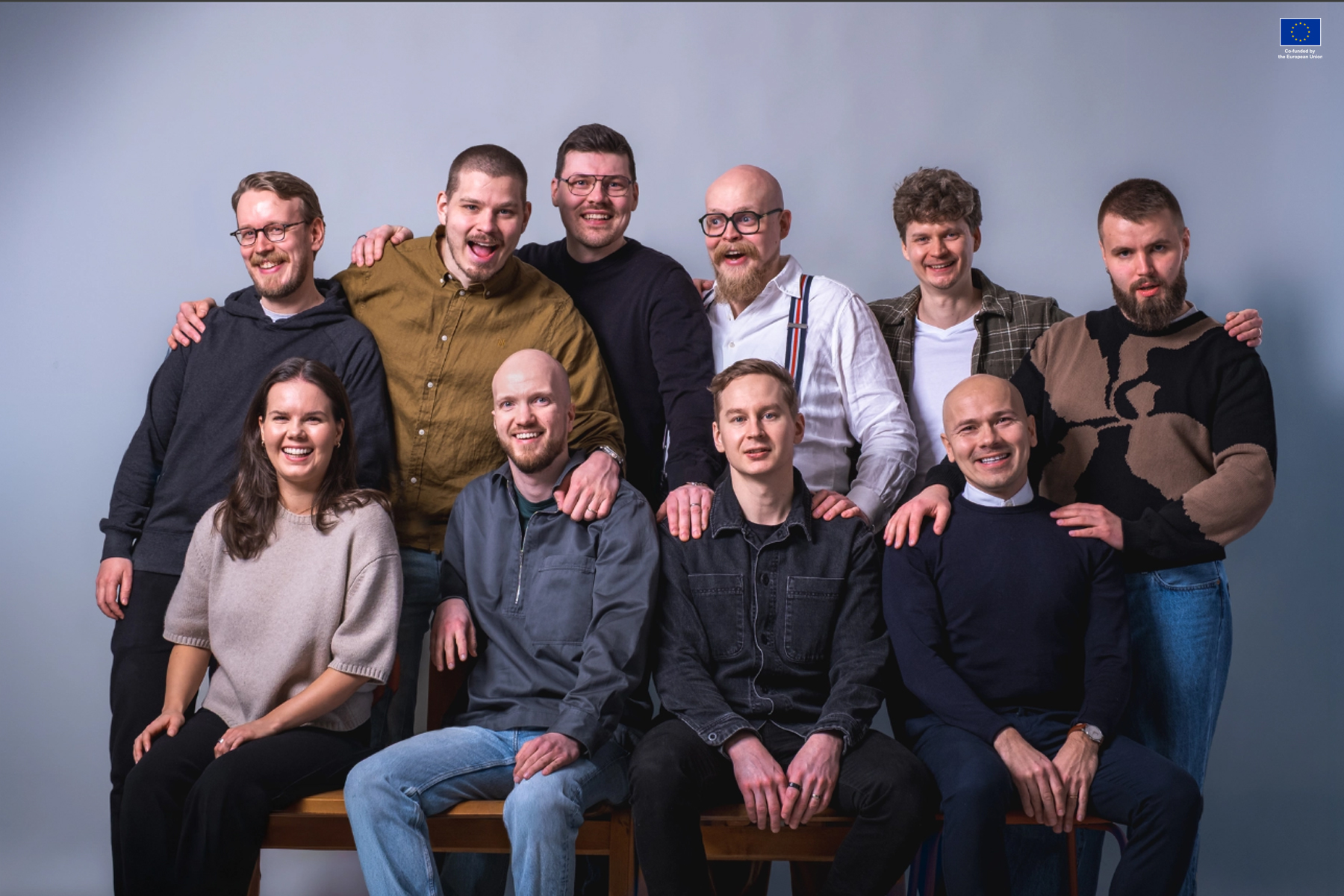
Text by Martti Asikainen, 17.6.2026 | Photo by Rotomate
Rotomate, a Helsinki-based industrial AI startup, has raised €2.1 million in a pre-seed funding round led by Kvanted, a Nordic venture capital firm with a €70 million fund focused on European industrial technology.
The company was founded in 2024 by Mikko Kuusisto, a former Boston Consulting Group analyst who scaled commercial operations at smartphone refurbisher Swappie from €1 million to €220 million in revenue, and Dr Jesse Miettinen, a mechanical engineering researcher from Aalto University, Finland’s leading technical university, specialising in industrial AI.
The round also included Robin Capital, Angel Invest, a grant from Business Finland, the Finnish government’s innovation funding agency, participation from Accel through its scout programme, and angel investors Jiri Heinonen, co-founder of Swappie, and Nordic Makers’ Moaffak Ahmed.
The company’s software sits on top of existing condition monitoring systems already installed in factories and replaces the generic alerts those systems produce with detailed diagnostic reports. Each report identifies the probable cause of an equipment problem, the recommended course of action, and an explanation of the reasoning behind it.
The problem Rotomate solves
Industrial plants typically install sensors and monitoring software to detect developing faults in machinery before they cause failures. The monitoring systems issue alerts when readings fall outside expected ranges, but the interpretation of those alerts usually requires a specialist engineer.
A reliability engineer covering hundreds of assets across a large plant cannot review every alert in depth on any given day, meaning significant warnings can go unaddressed.
Rotomate’s software ingests machine data alongside maintenance history and operational context, then generates the kind of analysis a senior specialist would produce manually. The company says the approach reduces manual monitoring time by up to 83% and allows expert-level assessment to run continuously across all equipment in a plant rather than only those an engineer has time to inspect.
Both figures are the company’s own claims and have not been independently verified.
“Improving uptime and industrial reliability has an enormous potential in almost any industrial plant or factory, and it is bottlenecked not by data but by human attention,” said Kuusisto. “We built Rotomate to scale that expertise, so that every plant can act on the most up-to-date data around the clock.”
Miettinen, who has authored more than ten peer-reviewed publications in the field and leads a team in which several members hold PhDs in mechanical engineering or industrial AI, said the gap between alert and diagnosis was the core problem the software addresses. “Most existing condition monitoring software stops at alerts. Experts go further. Software should too,” he said.
Customers and competitive landscape
Rotomate’s existing customers include Metsä Group, SSAB, and Aurubis, process industry companies whose combined annual production across client sites exceeds €35 billion, according to the company. The startup has commercial activity across Finland, Sweden, Germany, the Netherlands, and Poland.
The broader market for industrial AI and asset performance management software is well-funded and competitive. Augury, a New York and Haifa-based machine health company, is among the most prominent players in the condition monitoring category and has raised substantial venture capital. AspenTech, which is part of industrial group Emerson, serves large enterprise customers in oil, gas, and chemicals with complex, multi-year implementations.
Rotomate’s stated differentiator is that its software layers onto existing monitoring hardware without requiring replacement or new installation, reducing the cost and disruption of adoption. Eerik Paasikivi, general partner at Kvanted, said the company’s approach was well-suited to mid-market European factories.
“European factories are sitting on years of machine data they don’t have the specialist capacity to act on, and the cost shows up as unplanned downtime and lost output,” Paasikivi said.
Funding was needed
According to the Rotomate, the €2.1 million will go towards product development, hiring, and expanding the company’s European footprint. Rotomate has grown from two to ten employees over the past year and is recruiting across engineering, product, and commercial roles.
At €2.1 million, the pre-seed round is modest relative to the resources of established competitors, which have raised considerably more. Whether Rotomate’s no-new-hardware model and focus on mid-market European industrial customers provides sufficient differentiation to build a defensible position against better-capitalised rivals, including those that may adopt similar approaches, remains to be seen.
The company has not disclosed revenue figures or the number of plants currently using the software.