

Supercomputers, AI and quantum computers can solve together what none can alone, CSC says
In hybrid computing, a supercomputer, AI and a quantum computer share a problem, each doing the part it does best, according to CSC. Finland has offered the approach since 2022, and more quantum hardware is on the way.
Martti Asikainen | 17.11.2026 | Photo by Juha Torvinen / CSC
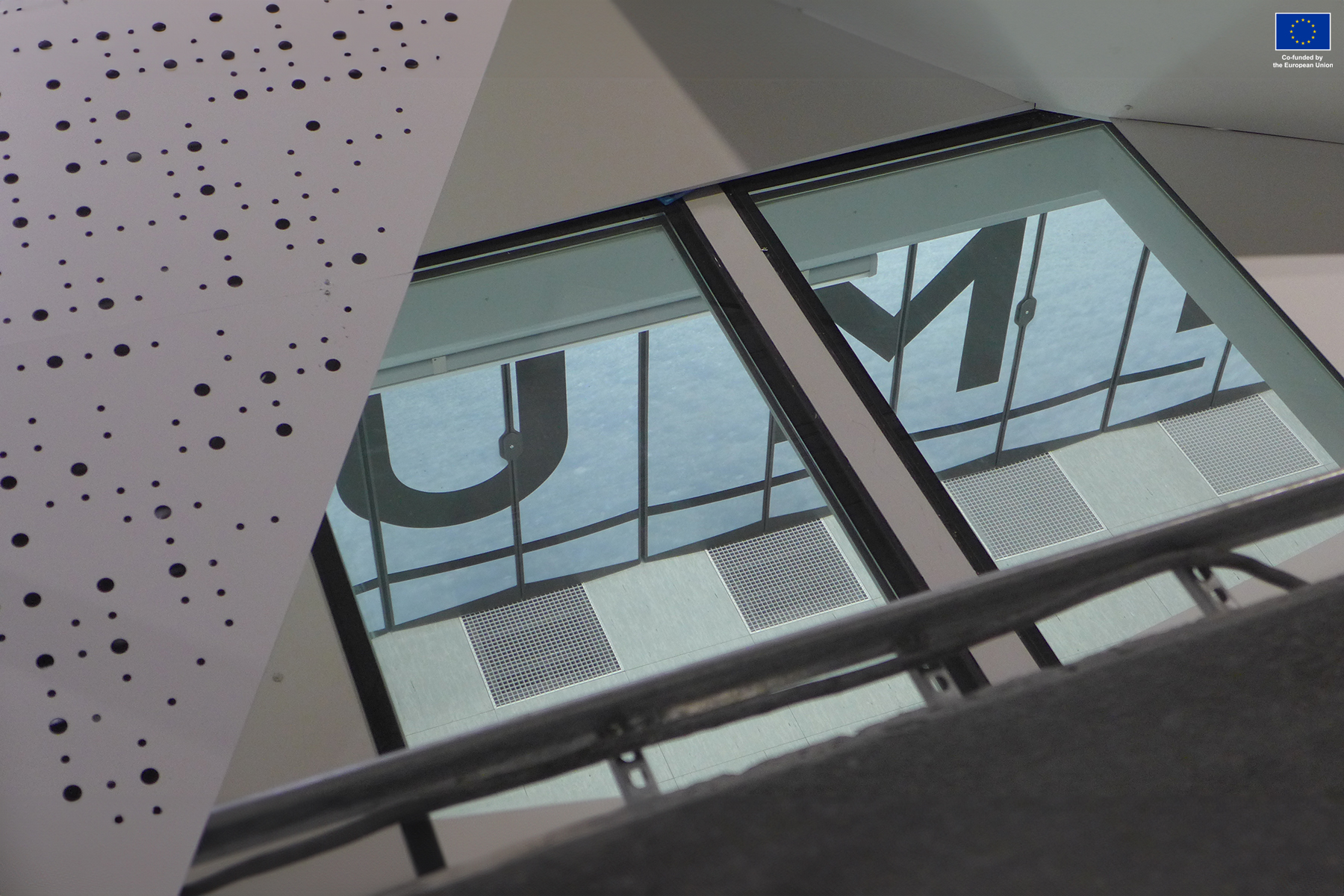
Some problems are too hard for any single kind of computer, and the answer is to use several together, says CSC, the Finnish IT centre for science that runs the LUMI supercomputer.
In what it calls hybrid computing, a supercomputer, artificial intelligence and a quantum computer work on a problem side by side. CSC compares it with a person who counts on their fingers, then picks up a pen and paper, then a calculator, using whichever tool suits the task.
In an article published on 12 November, CSC says Finland has had the approach available since 2022, when its first quantum computer was connected to LUMI.
Each method for what it does best
Supercomputers have solved problems beyond human ability for more than 60 years, CSC says, and their processing power has grown a millionfold in the past three decades. That growth underpins modern AI.
AI has also changed how science is done: instead of solving every equation, it can find shortcuts by learning from large datasets, CSC says. It can, for example, predict the weather in minutes rather than hours, often as accurately.
But AI cannot find reliable shortcuts for every problem, and direct solving on supercomputers will stay essential. Some problems grow exponentially harder as they get bigger, and even future supercomputers will struggle with them. For these, CSC points to quantum computing.
The physicist Richard Feynman made the case in 1981, saying “nature isn’t classical, dammit”, and arguing that simulating nature calls for quantum mechanics. A quantum computer works with qubits, which can hold combinations of zero and one.
Its calculations are arranged so that wrong answers cancel out and correct ones are reinforced. For some problems this is far more efficient, CSC says, and for others it is unsuitable.
An example: the magnet in a wind turbine
CSC illustrates the idea with the magnet in a wind turbine, whose strength comes from the collective behaviour of electrons, which is hard for conventional computers to calculate.
First, AI quickly estimates the material’s electronic structure. A supercomputer then refines the estimate with an approximate solution of the Schrödinger equation and isolates the hardest part. A quantum computer calculates that part more accurately, while AI spots errors in its calculations so they can be corrected.
The supercomputer puts the result into a model of the whole material, and the steps repeat until the result converges. CSC presents this as an illustration, not a finished experiment.
Finland’s quantum ladder
VTT’s Helmi quantum computer was connected to LUMI in 2022, which made Finland one of the first countries to join a quantum computer to a supercomputer.
LUMI has since been linked to VTT’s 50-qubit Q50, Aalto University’s 20-qubit Q20 and the pan-European VLQ quantum computer in the Czech Republic. A 150-qubit computer built by the Finnish company IQM has just been unpacked at VTT in Otaniemi, according to CSC.
Today’s quantum computers still make too many errors to solve practical problems better than conventional machines, CSC says. The next important step is LUMI-IQ, which is to be installed at CSC’s data centre in Kajaani in 2027 as part of the LUMI AI Factory.
It will start with 150 qubits and be upgraded in stages to 2029, aiming at error-corrected “logical” qubits. Companies can try LUMI through Finnish AI Region’s Try & Buy service.