

Finland eyes specialised AI as next major global export
The Nordic country aims to carve a niche in industrial artificial intelligence, avoiding a costly arms race with tech giants over ChatGPT-style models.
Text: Martti Asikainen 26.1.2026 | Photo: Adobe Stock Photos
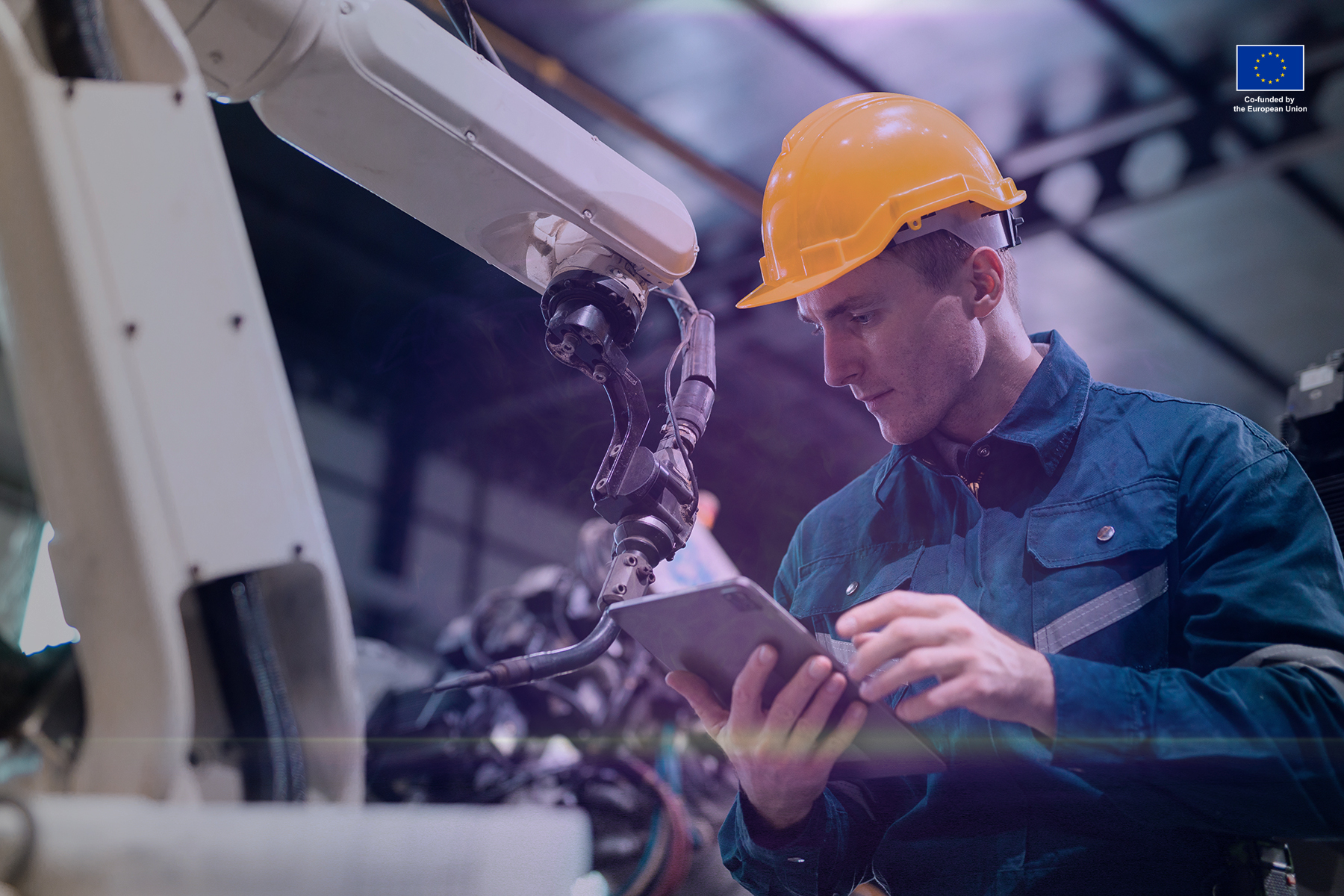
While technology giants pour billions into ever-larger AI language models, Finland is charting a different course. The Nordic country is developing specialised, energy-efficient artificial intelligence for factories, telecommunications networks and automated systems.
Researchers at Aalto University say the country’s decades of expertise in targeted AI solutions could become a major export, providing an alternative to the resource-intensive models dominating current headlines.
The strategy reflects a pragmatic assessment of Finland’s position in the global AI race. Rather than competing directly with the massive investments behind ChatGPT and similar systems, Finnish researchers advocate focusing on industrial applications where precision matters more than scale.
The squirrel strategy
Petri Mähönen, Vice Dean of the School of Electrical Engineering at Aalto University, says Finland’s advantage is agility: when presented with a problem of a limited scope, they can quickly tackle it and develop precise solutions.
“After all, squirrels can move nimbly among dinosaurs – especially when they invent something new,” Mähönen told Aalto University’s news service.
The approach targets practical applications in sectors where Finland already has industrial strengths, including automation giants ABB and Konecranes, as well as telecommunications infrastructure.
These specialised models differ fundamentally from the generative AI tools that have captured public attention. While large language models require massive computing power and hundreds of billions of parameters, dedicated AI models can be tailored to specific industrial needs with far fewer resources.
A greener alternative
Training large AI models consumes enormous energy – some estimates suggest a single model uses as much power as hundreds of homes annually. Specialised models can be small enough to run on portable devices without massive data centres.
“The beauty of AI lies in its ability to optimise resource use,” Mähönen explained. “It can calculate how to provide the most efficient and user-friendly networks – without overloading the nearby power plant.”
Jussi Ryynänen, Dean of the School of Electrical Engineering, emphasised that smaller models also offer better transparency. “If we know how a model has made a decision, we can detect issues and take responsibility for them,” he said.
Real-world impact
Current 5G networks already require managing thousands of parameters – beyond human capacity to optimise manually. Machine learning models handle tasks from predicting navigation routes to managing network bandwidth and maintaining stable connections in tunnels.
“There are still gurus who can intuit the adjustments needed,” Ryynänen noted. “This is not sustainable, however, as these experts are beginning to retire from the field.”
Aalto University has launched a bachelor’s programme in Computer Engineering to train engineers who can develop integrated solutions combining microelectronics, telecommunications and software expertise.
The researchers argue that Finland’s combination of technical expertise, industrial partnerships and commitment to sustainable technology could prove decisive in fragmented specialised AI markets.


Finnish AI Region
2022-2025.
Media contacts