Smart ring giant Oura completes US shift as ownership patterns raise questions
Legal restructuring caps years-long Americanisation of company now majority-owned by US investors, highlighting European capital market weakness.
Text by Martti Asikainen, 19.2.2026 | Photo by Oura Health
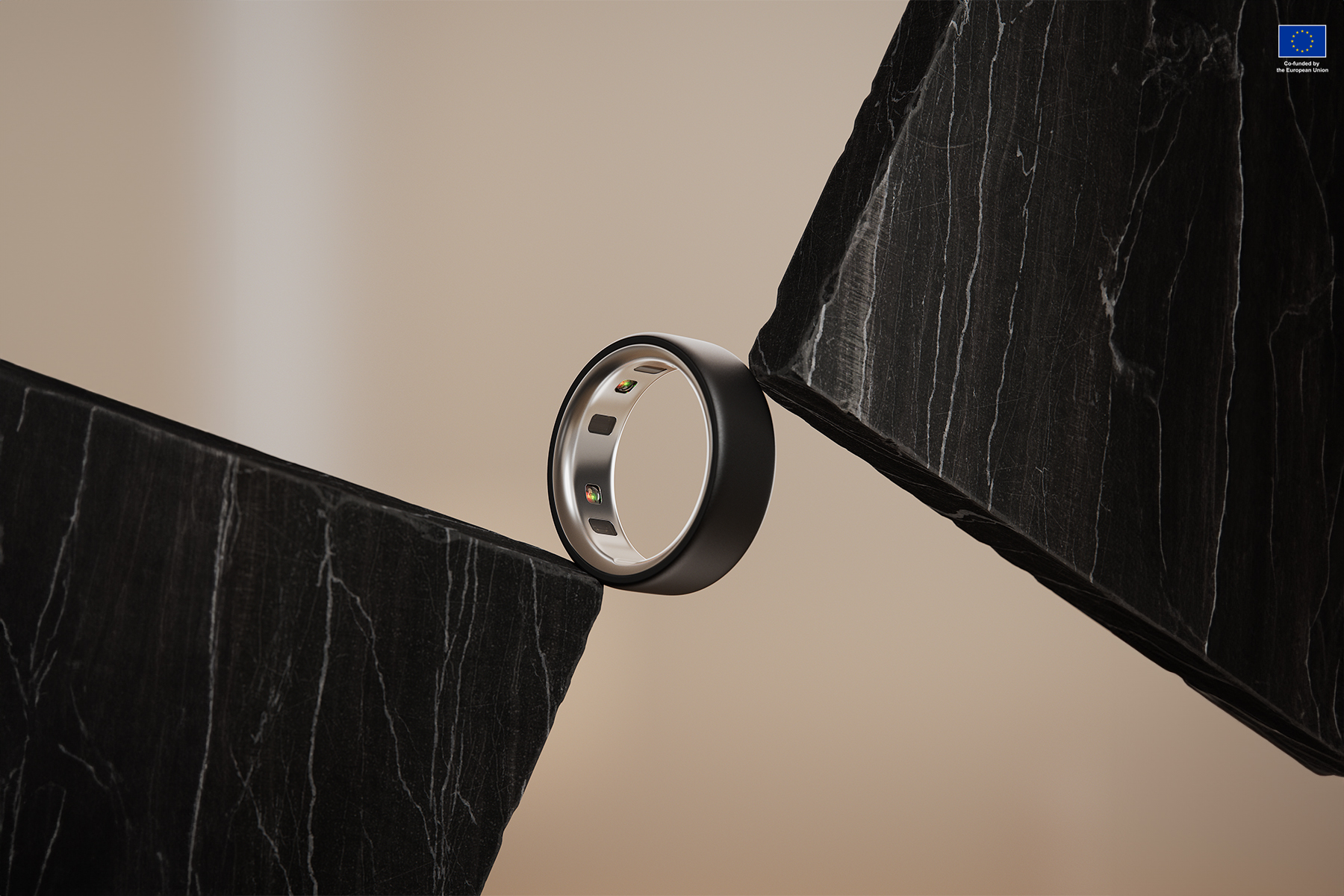
The Oulu-born smart ring manufacturer Oura Health is relocating its parent company to Delaware, formalising the company’s Americanisation. Many Finns still consider Oura a national success story.
The move follows years of gradual transformation. In practice, the company’s global headquarters shifted to the United States when American CEO Tom Hale took charge in 2022.
Oura’s founders and core team sold their stakes in 2020-2021. By 2018, the company’s operating style had already become extremely American, founder Petteri Lahtela told Talouselämä in an interview.
Now the legal structure is catching up.
Through the Delaware flip, US-based Oura Inc will replace Finnish parent company Oura Health Oy, though the European headquarters will remain in Oulu, where half the workforce is based.
Delaware's appeal to companies
Delaware is known for business-friendly regulation and low taxation, which facilitate stock market listings. For Oura, the restructuring also simplifies access to large US capital pools.
“Practically, we’ll have a mailbox in Delaware. That’s what it will amount to. But it makes administering a complex global company a bit easier,” Hale told Kauppalehti earlier this week.
The change also facilitates fundraising from US investors, who strongly prefer Delaware-registered companies, particularly for very large funding rounds.
“Large capital pools, which are largely in the United States, very much prefer to invest in a Delaware-registered parent company,” Hale said.
Foreign ownership dominates
According to Kauppalehti, Oura is now majority-owned by foreign investors. The largest shareholders are funds managed by California-based Forerunner Partners and New York’s Bedford Ridge Investment Company. Finnish venture capital firm Lifeline Ventures ranks third.
This ownership structure reflects a broader challenge for Finland and the Nordic countries, which are capable of creating high-quality growth companies that rarely remain in domestic ownership or control.
The reason is simple. The Nordic countries lack proper capital markets capable of financing later-stage growth. Finland’s largest institutional investors, pension companies, cannot match the risk appetite of US venture capital.
At the same time, many see the Delaware flip as a symptom of a larger problem. It concerns all of Europe, which struggles to provide the capital, talent pools and market access needed to retain companies at global scale. The challenge particularly affects mid-stage funding rounds.
Strong financial performance
Oura’s relocation announcement comes alongside strong financial results. The company’s revenue rose to €840M in the fiscal year ending September 2025, compared with €367M the previous year. Operating profit was €113M, representing a 13.5% margin.
This is an exceptionally strong result for a growth-stage technology company. CEO Hale says he is satisfied with the figures.
“They could always be better, but I think that’s quite a good performance. Perhaps even more importantly, this was the third consecutive year we’ve essentially doubled revenue. It means we can maintain such growth; it’s not levelling off,” he told Kauppalehti.
The company employs approximately 1,000 people, half of whom remain in Finland. A quarter of the Finnish workforce was recruited during the past 12 months, with roles focusing on research and product development.
Rapid market expansion
Oura has sold 5.5M smart rings since launch and expects to reach 10M ring sales this year.
The smart ring market is growing rapidly. Market research firm IDC estimates that smart ring shipments grew 49% in 2025 compared with 6% growth for smartwatches. According to IDC data, 163.5M smartwatches and 4.3M smart rings were shipped in 2025.
Oura recently expanded to Abu Dhabi and the United Arab Emirates. Mexico’s market also opened this week. Asian markets, including Hong Kong, Singapore, Malaysia and China, are planned within the next two years.
“We’re growing slightly under 100% annually in the United States. Outside the US, which is a smaller portion of sales, we’re growing even faster, closer to 200%,” Hale told Kauppalehti.
Changes may become more common
Oura is not the only Finnish company on such a path. Space technology company Iceye may follow a similar trajectory. Kauppalehti reported that the company, valued at €2.4B, already has largely American ownership despite its Espoo headquarters.
The company has become a key part of Finnish defence industry through its pioneering satellite technology. If development follows the familiar pattern, Iceye’s next address could be across the Atlantic. On the other hand, Iceye has positioned itself primarily as a European player, which has helped its growth.
In Oura’s case, approximately 500 employees will remain in Finland, focusing on research and product development. However, the mailbox extends beyond operational activities and logistics.
In practice, this is yet another Finnish success story that has completed its journey from Nordic startup to American company. In doing so, it takes with it its tax base, governance structure and strategic decision-making.