
IQM becomes first European quantum computing firm to list on a major US exchange
Finnish quantum hardware maker IQM Quantum Computers debuts on Nasdaq and Helsinki exchanges in one of the country’s largest listings in years, backed by a €337 million war chest for fault-tolerant quantum computing.
Text by Martti Asikainen, 7.7.2026 | Photo by IQM
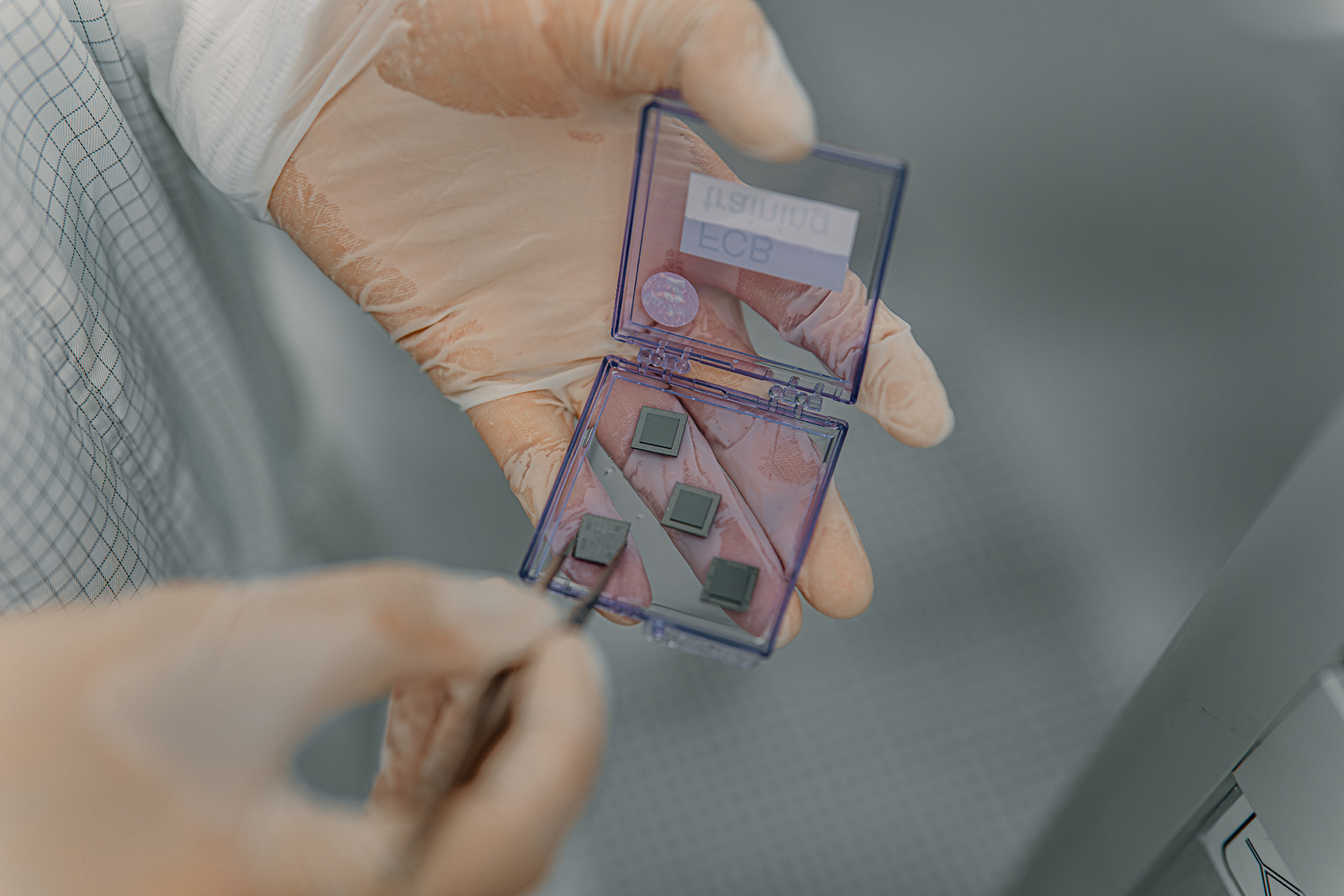
IQM Quantum Computers began trading on the Nasdaq Global Select Market on 2 July under the ticker “IQMX”, after completing its business combination with Real Asset Acquisition Corp (RAAQ), a Princeton-based special purpose acquisition company.
The deal, which valued the Espoo-based company at approximately $1.9 billion (€1.7 billion), makes IQM the first European quantum computing company to list on a major US exchange.
A parallel listing followed on Nasdaq Helsinki on 3 July, one of the largest Finnish stock market debuts in years, after Finland’s Financial Supervisory Authority approved the company’s Finnish-language prospectus on 1 July.
What the listing raised
IQM emerged from the transaction with a pro forma cash position of €337 million, which the company says will fund the development of fault-tolerant quantum computing — machines capable of correcting their own errors reliably enough for large-scale industrial use. Yle put the deal’s valuation at around $1.9 billion (€1.7 billion), while Tech Funding News reported a slightly lower pre-money figure of approximately $1.8 billion.
The Helsinki leg of the listing is one of the largest on that exchange in years. Yle reported that IQM’s is the only Finnish listing in the past decade to approach the scale of Kojamo’s 2018 debut, which valued the residential property firm at €2.1 billion — the sole larger listing in that period. The most recent listing of comparable size, Yle noted, was Mandatum, the financial services firm spun out of insurer Sampo, which listed at €1.8 billion in 2023.
Juha Vartiainen, an IQM co-founder and the company’s head of international affairs, told Yle that listing in Helsinki alongside New York was intended to ensure the value created by the company would also be retained in Finland — an ambition IQM’s own listing announcement frames as aspirational rather than yet accomplished.
Jan Goetz, IQM’s CEO and co-founder, described quantum computing as reaching an inflection point, with organisations worldwide moving from experimentation to deployment. He said the company was entering the public markets from a position of strength, pointing to its technology, expanding customer base and strategy for scaling commercial adoption.
A rare revenue base for the sector
IQM reported revenue of more than €31 million in 2025 and an order backlog of €67 million at the end of the year, having sold 23 quantum computers to date, according to Yle.
In April, the company recorded its first sales to commercial rather than public-sector or research customers: a 54-qubit machine — qubits being the basic units of information in a quantum computer — sold to Poland’s Galaxy Systemy Informatyczne, followed weeks later by a 20-qubit system sold to Japan’s Toyo.
This places IQM in an unusual position among listed and soon-to-be-listed quantum hardware makers. Tech Funding News reported that Quantinuum, a Honeywell-backed rival that filed for a Nasdaq IPO in May seeking a valuation of up to $20 billion, posted a $136.6 million net loss on just $5.2 million in quarterly revenue. IonQ and Rigetti Computing, both US-based and already publicly traded, also remain unprofitable.
The global quantum technology market could be worth up to $100 billion by 2035, according to McKinsey estimates cited by Yle, with quantum computing hardware and services accounting for between $43 billion and $71 billion of that total.
IQM’s approach centres on what it calls a “Production Quantum” model: full-stack, open-architecture systems that customers own and operate on-premises, rather than accessing solely through the cloud.
Technology and global footprint
IQM’s machines are installed at research and computing institutions including Italy’s CINECA, Germany’s Leibniz Supercomputing Centre and the US Department of Energy’s Oak Ridge National Laboratory, and the company has just opened its first Quantum Technology Center, in Maryland. IQM says it recently made progress on a new approach to quantum error correction that it believes reduces the hardware needed to reach fault tolerance, building on the roadmap the Nasdaq proceeds are intended to fund.
IQM was founded in 2018 by Jan Goetz, Mikko Möttönen, Kuan Yen Tan and Juha Vartiainen, and employs more than 400 people, based mainly in Espoo with a major operation in Munich and a broader footprint across Europe, Asia and North America.
Existing shareholders did not sell down their holdings in the SPAC merger and agreed to standard lock-up terms restricting further sales, according to Tech Funding News. Tesi, Finland’s state-owned venture capital fund, and pension insurers Varma and Elo remain shareholders, and the merger also included a private investment in public equity (PIPE) round of roughly $146 million, backed in part by Ilmarinen, another Finnish pension insurer.
Sierk Poetting, the company’s chairman, described the listing as an acceleration of an existing strategy rather than a change of direction, according to Tech Funding News — a characterisation that reflects the company’s own framing of the deal rather than independent analysis. Vartiainen struck a similar note, telling Yle that the wider quantum sector is entering a period of consolidation in which companies will increasingly face a choice between acquiring rivals or being acquired themselves.