Nokia and Nvidia launch AI-native radio network platform, promising to double capacity by 2028
The companies say telecoms operators will be able to carry significantly more data over existing spectrum using AI processing in the radio network, though the headline efficiency gains remain projections rather than proven results.
Text by Martti Asikainen, 16.7.2026 | Photo by Nokia
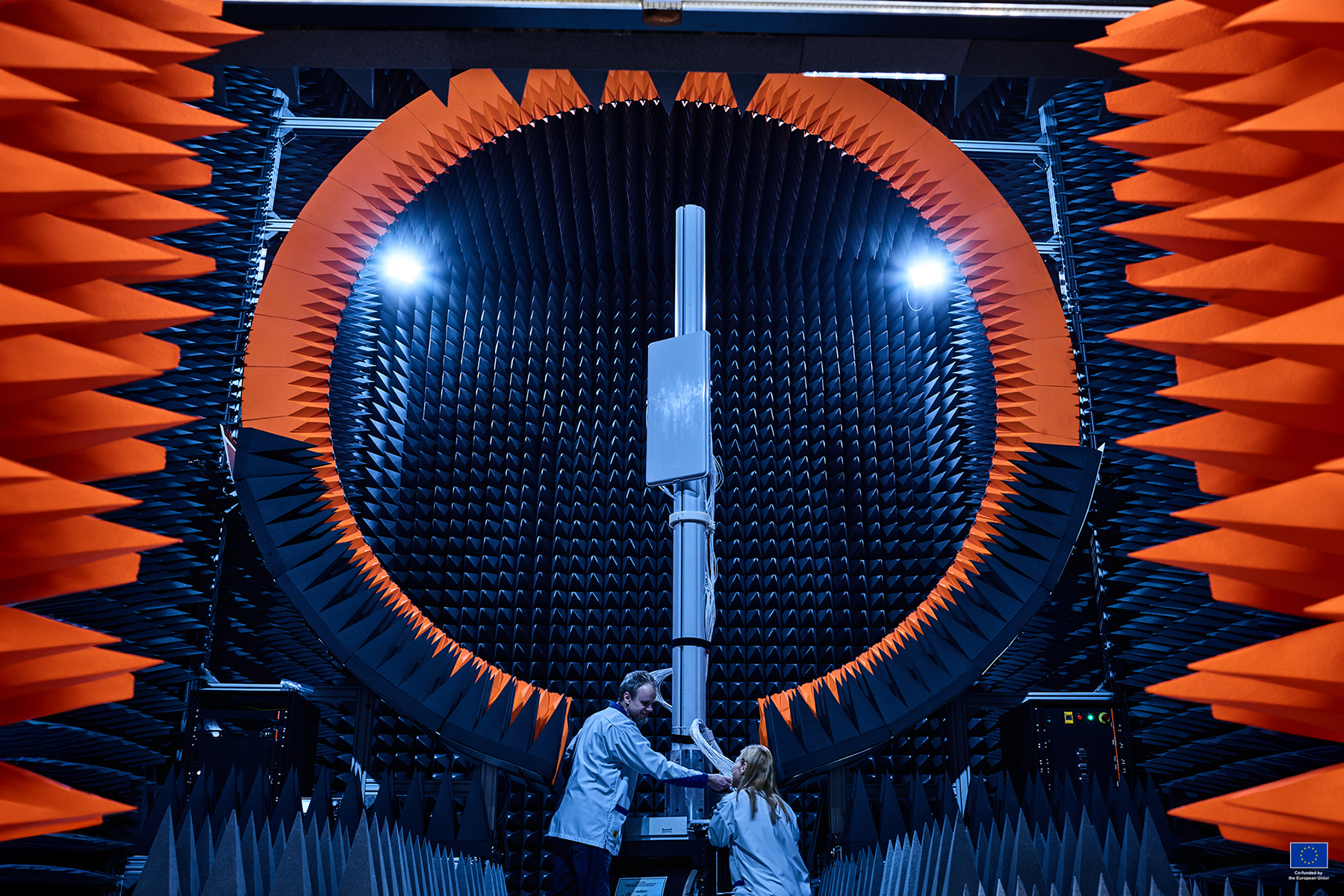
Finnish Nokia has launched what it describes as the industry’s first commercial AI-native radio access network (RAN) platform, built jointly with the chipmaker Nvidia. The system is designed to let mobile operators handle more traffic over the airwaves they already own, without needing to acquire additional spectrum.
The platform combines Nokia’s AI-native anyRAN software with Nvidia’s Aerial AI-RAN technology. Nokia said the system has already delivered spectral efficiency gains of more than 20% through AI-driven radio techniques, and the companies are targeting 50% by 2027 and more than 100% by 2028 — effectively doubling the capacity operators can extract from existing spectrum.
Three ways to adopt it
Nokia is offering operators three hardware routes onto the platform, according to the company. Existing Nokia customers can add a GPU-powered plug-in unit to their current AirScale equipment.
Operators wanting more flexibility can deploy a standalone AI-RAN node, usable alongside other equipment or on its own. A third option, aimed at operators moving to cloud-native networks, uses off-the-shelf servers from ecosystem partners.
Nokia said its wider existing product line will also be made fully compliant with Open RAN standards, an industry framework intended to let operators mix equipment from different vendors.
Rather than selling the technology as a one-off hardware purchase, Nokia is offering it through a software subscription, which it says will let operators receive new AI features and performance improvements without waiting for hardware replacement cycles.
Nokia’s president and chief executive, Justin Hotard, described the shift as “the biggest innovation in radio in decades.” He said the software could ultimately provide operators with a route toward 6G, the next generation of mobile technology, without requiring a full hardware overhaul.
Part of a wider Nvidia tie-up
The launch builds on a strategic partnership between the two companies announced less than ten months ago, under which Nvidia took an equity stake in Nokia worth around $1 billion.
Nvidia’s chief executive, Jensen Huang, said the radio access network was becoming “the next AI infrastructure,” arguing that bringing Nvidia’s computing platform into the baseband — the core signal-processing component of a mobile base station — would help operators prepare for future AI services as well as 6G.
Rémy Pascal, a mobile infrastructure analyst at the research firm Omdia, said the launch marked “an important step” in moving AI-RAN from industry concept to commercial product, noting that the range of adoption options gave operators practical choices depending on their existing infrastructure.
Nokia’s pilot deployments are not due to begin until the end of this year, with commercial availability scheduled for 2027 — meaning the more than 100% efficiency gain being promised by 2028 is a forward-looking target rather than a demonstrated result. Only the initial 20% figure has been achieved to date. Nvidia’s equity stake in Nokia is also worth noting as context: the company promoting the platform’s benefits has a direct financial interest in Nokia’s commercial success.