
ICEYE reaches for the stars with a record-breaking €1 billion startup round
Series F round led by General Atlantic values the Finnish ICEYE at over €10 billion, in the largest startup funding round in Finnish history. The company operates the world’s largest constellation of synthetic aperture radar satellites.
Text by Martti Asikainen, 9.6.2026 | Photo by ICEYE
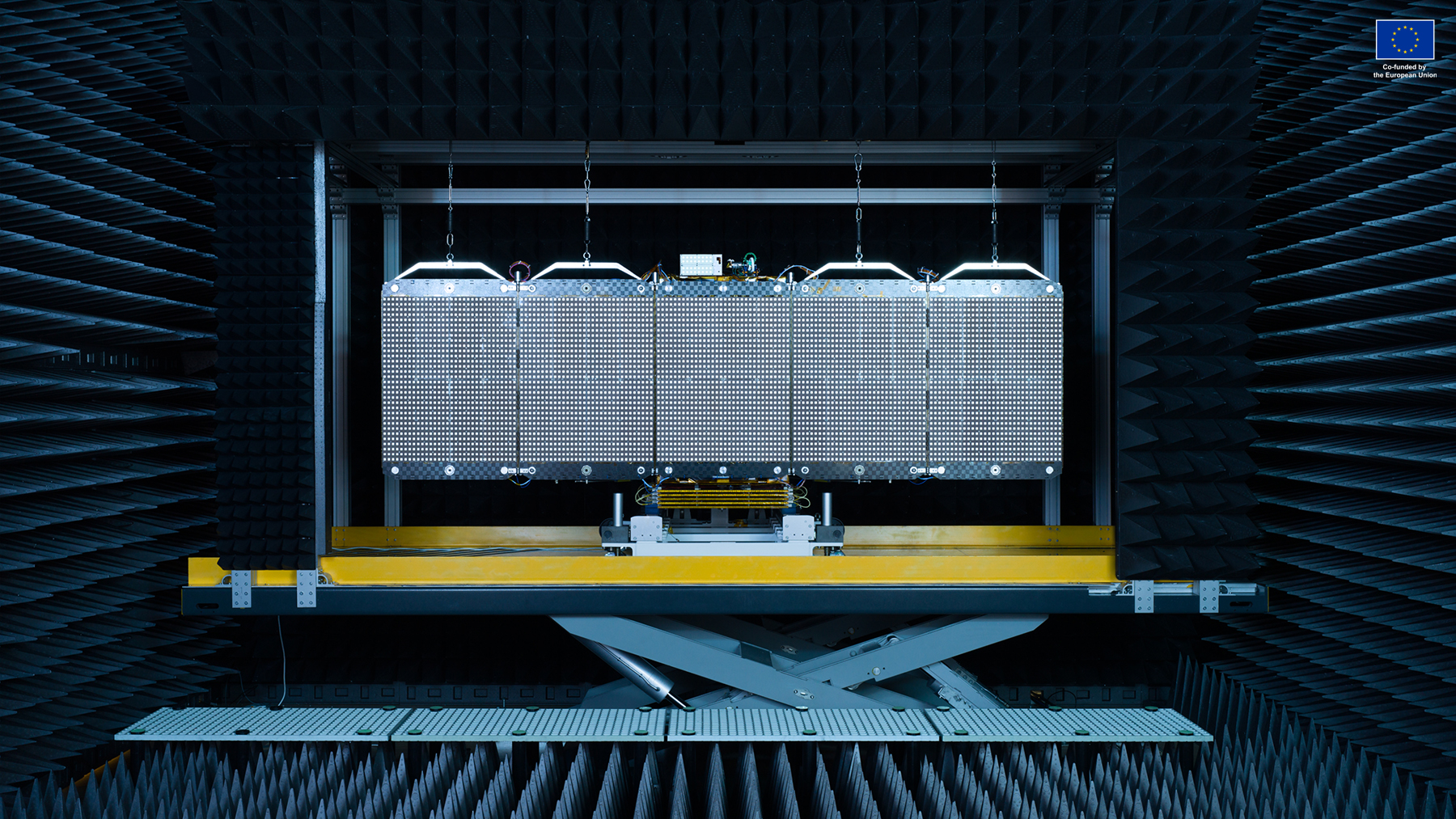
ICEYE, the Finnish company that operates the world’s largest constellation of synthetic aperture radar satellites, has raised more than €1 billion in its latest funding round, as governments across Europe and beyond accelerate their push to secure independent, space-based intelligence capabilities.
The primary Series F round raised €450 million, led by US growth equity firm General Atlantic, at a valuation exceeding €10 billion. Together with a secondary placement, the total round surpasses €1 billion. No previous Finnish startup has attracted a private funding round of this scale.
Additional investors include Solidium, Tesi, Varma, and Ilmarinen, a group of Finnish state-affiliated and pension investors, alongside Lifeline Ventures, Nokia, Qatar Investment Authority, and TCV.
The breadth of the investor base, spanning domestic institutions, sovereign wealth, and global growth funds, underscores how satellite intelligence has shifted from a niche defence procurement category into mainstream infrastructure investment.
From start-up to sovereign supplier
Founded and headquartered in Finland, ICEYE now employs over 1,000 people across offices in Poland, Spain, the UK, Australia, Japan, the UAE, Greece, and the United States.
The company pioneered the use of small, commercially produced SAR satellites, radar imaging systems that can capture high-resolution imagery through cloud cover, darkness, and adverse weather, and has since scaled that technology into a vertically integrated platform serving both government and commercial customers.
Seven European governments have to date procured sovereign satellite systems from ICEYE, making it the leading provider of space-based intelligence of this kind. Most recently, the company delivered a fully operational constellation to the Polish Armed Forces within twelve months of contract signing, a pace described as among the fastest sovereign space deployments in history.
Rafal Modrzewski, co-founder and chief executive of ICEYE, framed the raise in explicitly strategic terms. “Sovereign intelligence from space is entering a new era and the window to build it is now,” he said. “This funding enables us to accelerate the delivery of new capabilities to governments and customers faster than ever before.”
Profitable, scaling, and backed by Finland's biggest name
In 2025, ICEYE crossed €250 million in revenue and over €100 million in EBITDA, while building a contracted backlog of more than €1.5 billion, figures that distinguish it from many defence-technology startups that have raised large rounds without yet demonstrating commercial scale.
The combination of profitability and rapid revenue growth is likely to have been central to attracting General Atlantic, a firm known for backing growth-stage companies with proven business models rather than speculative technology bets. Satellite production is now targeted to double, from 50 units per year to 100 annually by 2028.
Nokia also joins the round as a new strategic investor — a move that connects two of Finland’s most prominent technology companies and points to growing convergence between satellite imagery and secure communications infrastructure. Justin Hotard, Nokia’s president and chief executive, said the two companies bring “complementary strengths” that could advance Europe’s defence, resilience, and technological sovereignty.
Europe's sovereignty gap — and who fills it
Across Europe, governments have spent the past two years reassessing their dependence on non-European providers of critical technology — from semiconductors to cloud infrastructure to satellite data.
ICEYE, as a Finnish company operating under European jurisdiction, is well-positioned to benefit from that shift. Its model, in which governments receive their own dedicated constellation rather than simply purchasing access to shared commercial data, addresses the specific concern that intelligence derived from shared infrastructure may be compromised or withdrawn.
Sascha Günther, General Atlantic’s head of EMEA Technology, said ICEYE had “fundamentally redefined Earth observation” by pioneering agile satellite fleets that deliver greater strategic capability at lower cost.
With a backlog of €1.5 billion already contracted and production scaling rapidly, the immediate constraint is less about finding customers than about manufacturing and launching satellites fast enough to meet existing commitments — a challenge the fresh capital is designed to address.