

Swedish cloud provider bets on Oulu for AI data centre — as Finland positions itself as Nordic compute hub
GleSYS has agreed with Finnish asset manager Trevian to build Campus Oulu, a new data centre campus with expansion potential of up to 300 MW. The first phase, targeting 8 MW of IT load, is due to open in autumn 2026 — the latest in a string of international investments in Finland’s digital infrastructure.
Text by Martti Asikainen, 9.6.2026 | Photo by Adobe Stock Photos
A Swedish cloud and data centre operator has struck a deal to build a large-scale artificial intelligence data centre campus in northern Finland, adding to a growing cluster of international investment in the country’s digital infrastructure.
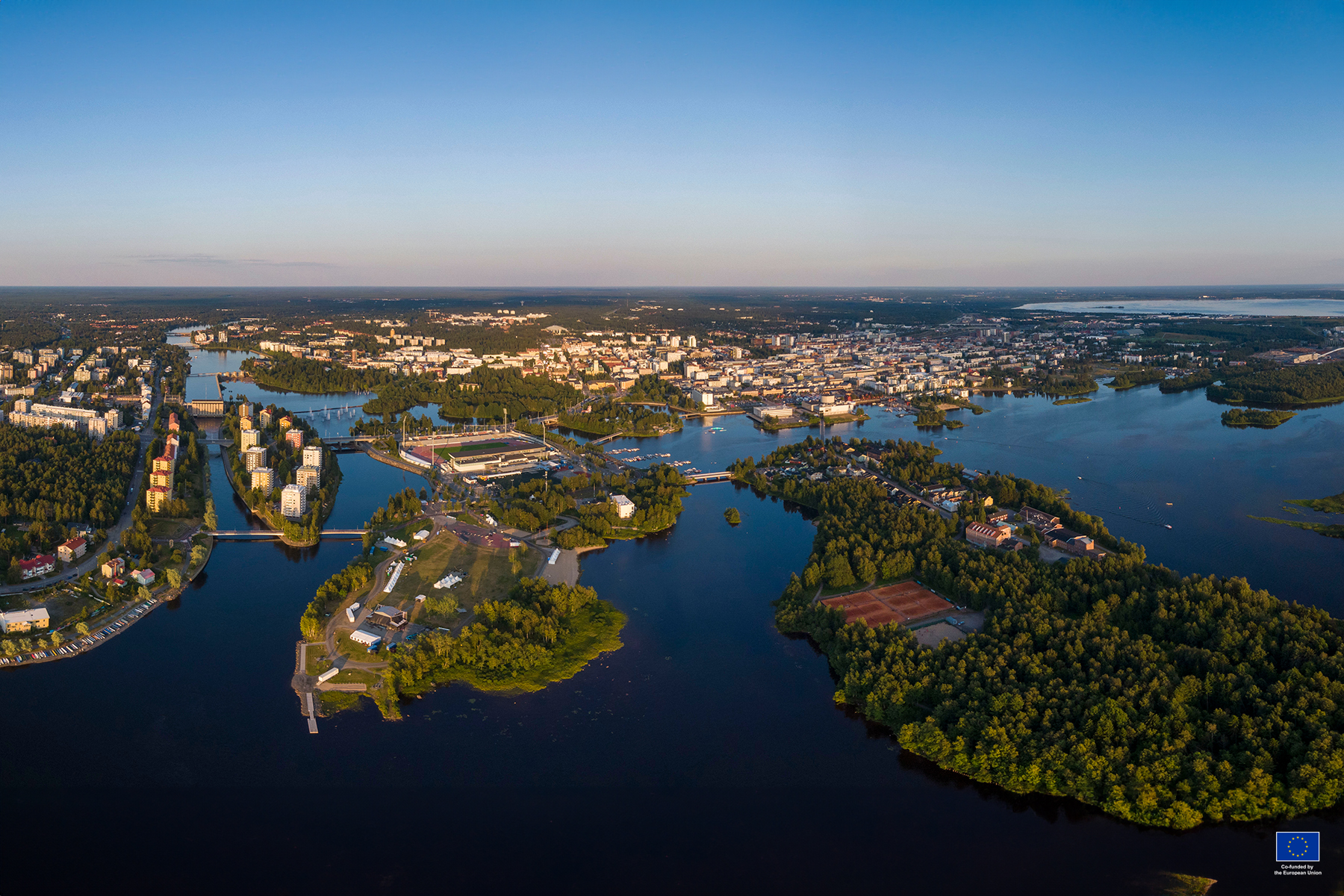
GleSYS, backed by European infrastructure fund manager Cube Infrastructure Managers, has agreed with Helsinki-based Trevian Asset Management to develop Campus Oulu in the Finnish city of Oulu, a technology hub of roughly 200,000 people on the Gulf of Bothnia.
The first phase, targeting 8 megawatts of IT load, is scheduled to open in autumn 2026. The campus has a long-term expansion potential of 300 MW, which would place it among the largest data centre sites in the Nordic region. No financial terms were disclosed.
The facility will operate on green electricity from the outset and use liquid cooling, a technology increasingly favoured for the intense heat generated by AI workloads. The partners said they are also in discussions about channelling surplus heat into Oulu’s district heating system.
A foothold built on acquisitions
GleSYS already operates data centres in Helsinki, Pori, Tampere, and Oulu. The Pori and Tampere sites were acquired in October 2025 through the purchase of managed private cloud operator Verne.
Campus Oulu represents a more deliberate step: purpose-built infrastructure for AI workloads, rather than absorbed legacy assets. It signals a shift in strategy from consolidating existing capacity to competing for the next generation of AI compute demand.
“Campus Oulu allows us to extend our infrastructure capabilities into next-generation AI and high-performance computing,” said Glenn Johansson, chief executive of GleSYS. He described the project as designed around phased expansion, allowing capacity to grow in line with customer demand rather than front-loading investment.
But why Oulu
The city was chosen for its established technology and research ecosystem. It hosts the University of Oulu and has longstanding ties to Nokia’s network infrastructure research, as well as GleSYS’s existing operational presence there.
Finland’s broader energy profile has made it an increasingly attractive destination for data centre developers. The country draws on nuclear, hydroelectric, and wind power, offering both reliability and low-carbon credentials. Its northern climate also reduces the energy cost of server cooling, improving the efficiency ratios that operators use to benchmark performance.
Reima Södervall, chief executive of Trevian Asset Management, said the combination of existing infrastructure, power availability, and scalable development capacity created “a highly competitive platform for digital infrastructure operators seeking long-term capacity in the Nordics.”
Trevian manages €1.2 billion in assets and has been accelerating its move into data centres as institutional investors increase their allocations to digital infrastructure.
Part of a broader Finnish push
Campus Oulu is one of several significant data centre projects announced in Finland in recent months.
In February, Hong Kong-listed 3 E Network Technology Group said it would position its Mikkeli facility as a Nordic AI computing hub. Google has invested more than €3.5 billion cumulatively in its Hamina data centre on Finland’s southern coast, with a further €1 billion expansion announced to meet AI-related demand.
The GleSYS project stands apart for its European ownership at a moment when digital sovereignty has become a growing concern across the continent. The question of whether critical computing infrastructure should remain under European jurisdiction has gained prominence in 2026, and GleSYS has emphasised its Nordic governance model as a differentiator.
The 300 MW headline figure should be read as long-term ambition rather than near-term commitment. The campus opens at just 8 MW — less than three percent of its theoretical maximum — and scaling will depend on securing anchor tenants and sustained demand for Nordic AI computing capacity. Whether the project reaches anything close to its ceiling will only become clear over years, not months.