

Finnish Finance Ministry urges digital-first legislation to speed AI adoption across public administration
A policy outlook says AI should be used in high-volume, high-impact processes, with productivity gains going to better services and stronger public finances. It also says laws on public officials’ rights, duties and liability would need amending.
Martti Asikainen | 8.10.2026 | Photo by Katja Säilä / Prime Minister’s Office
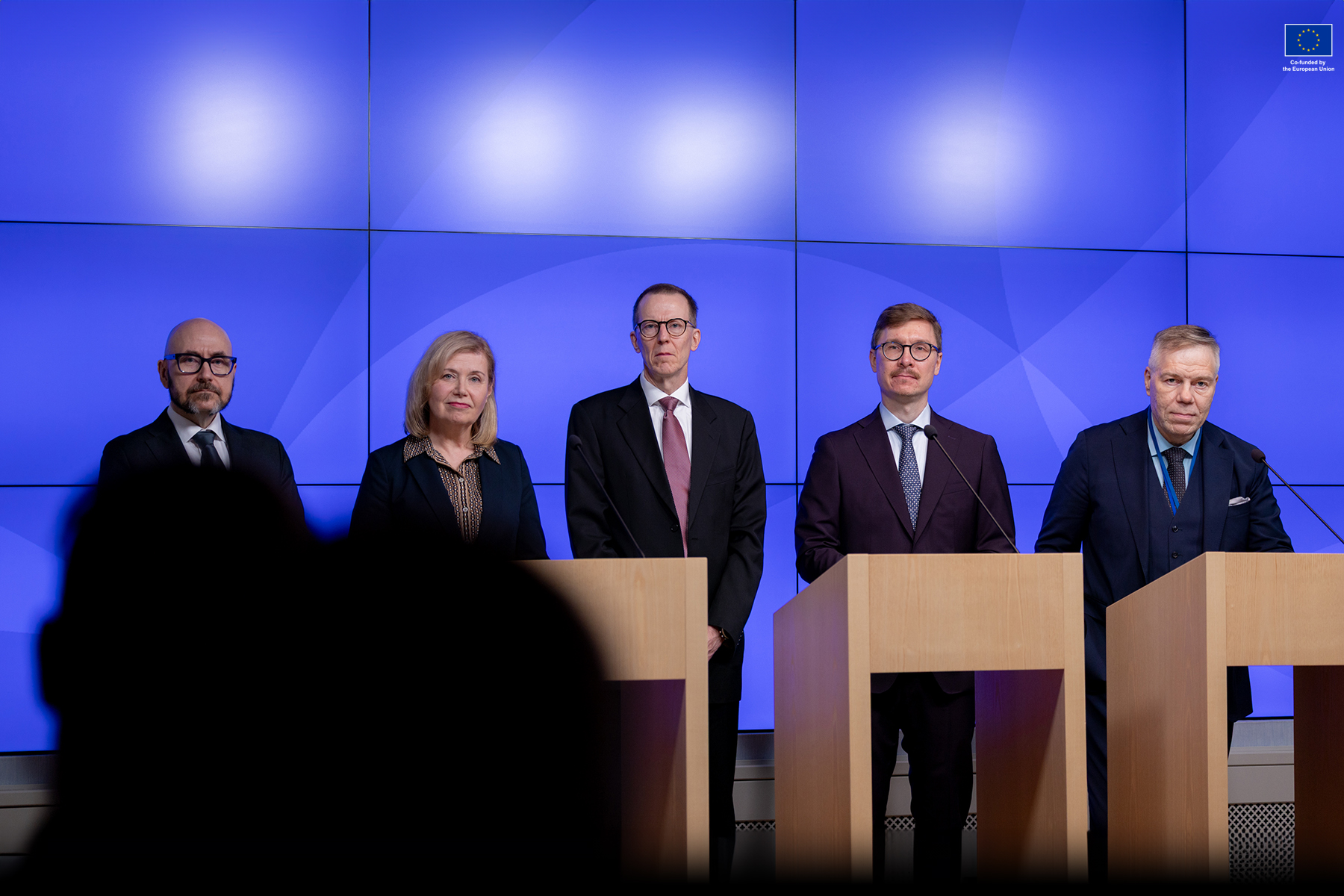
Finland’s Ministry of Finance has called on the next government to launch a legislative reform at the start of its term to enable widespread use of automation and AI in public administration.
The proposal is in the ministry’s policy outlook “Trust in the Future”, published on 7 October, ahead of parliamentary elections due in April 2027.
The ministry says development should move from isolated projects to an approach covering all of public administration. It bases the reform on what it calls a “digital-first” approach.
Digital-first administration
The outlook says AI could deliver significant benefits for public services, work and society over the coming years. For citizens, services may become faster, easier to use and better suited to individual needs.
For society, it sees opportunities to raise productivity and allocate resources more efficiently.
“Finland’s public administration has the tools to be an AI success story,” said Jarkko Levasma, the Government Chief Information Officer. He pointed to strong digital services, extensive information pools and high levels of competence and trust.
He added that success would require moving forward with several difficult things at once.
Legal limits and sovereignty
The ministry says AI should be adopted first in high-volume, high-impact processes. It does not name specific processes or agencies in the release.
It also says the gains should not simply be absorbed. Productivity improvements should be used to improve services and to strengthen public finances. The release does not say how the two aims should be balanced.
The outlook says public authorities must make sure AI solutions meet legal, ethical and good governance requirements. The reforms would also require changes to legislation on the position, rights, duties and liability of public officials.
It also calls for digital sovereignty and cybersecurity to be strengthened and secured through centralised financing. The release gives no figures or timeline for this.
The wider reform agenda
The AI proposals sit within a broader set of recommendations on the public sector’s finances and structure. The ministry says public finances must improve quickly to stop the cycle of indebtedness.
A parliamentary working group set a preliminary target in February of strengthening public finances by about €8-11 billion by the end of the next parliamentary term. It will update the target in December.
The outlook says public service commitments and structures should be updated for the AI era and adapted to what public finances can afford. It proposes reducing the number of municipalities and, among other options, the number of wellbeing services counties.
These regional bodies organise healthcare, social welfare and rescue services. It also says ministries should focus on core functions and that agency structures should be streamlined.
Options, not decisions
The outlook is an expert analysis by ministry officials. The release says elected decision-makers will decide the direction of policy. It presents the AI benefits as possibilities rather than forecasts, and it gives no estimate of the savings or productivity gains that AI could bring. It also does not explain how liability for public officials’ decisions would change when AI is involved.
The next concrete step comes on 26 October, when the ministry will publish an expenditure and structural review and a tax review. According to the release, they will present a large range of measures to strengthen public finances. The release does not say whether the reviews will address AI-related savings or productivity gains.