When the Algorithm Joins the Boardroom: Finnish Leaders Weigh AI's New Role in Strategy Work
A third of Finnish leaders believe AI could eventually outperform humans at strategic planning. But the same research reveals that accuracy alone isn’t enough. Leaders would rather work with a transparent, less accurate algorithm than a highly accurate black box they don’t understand.
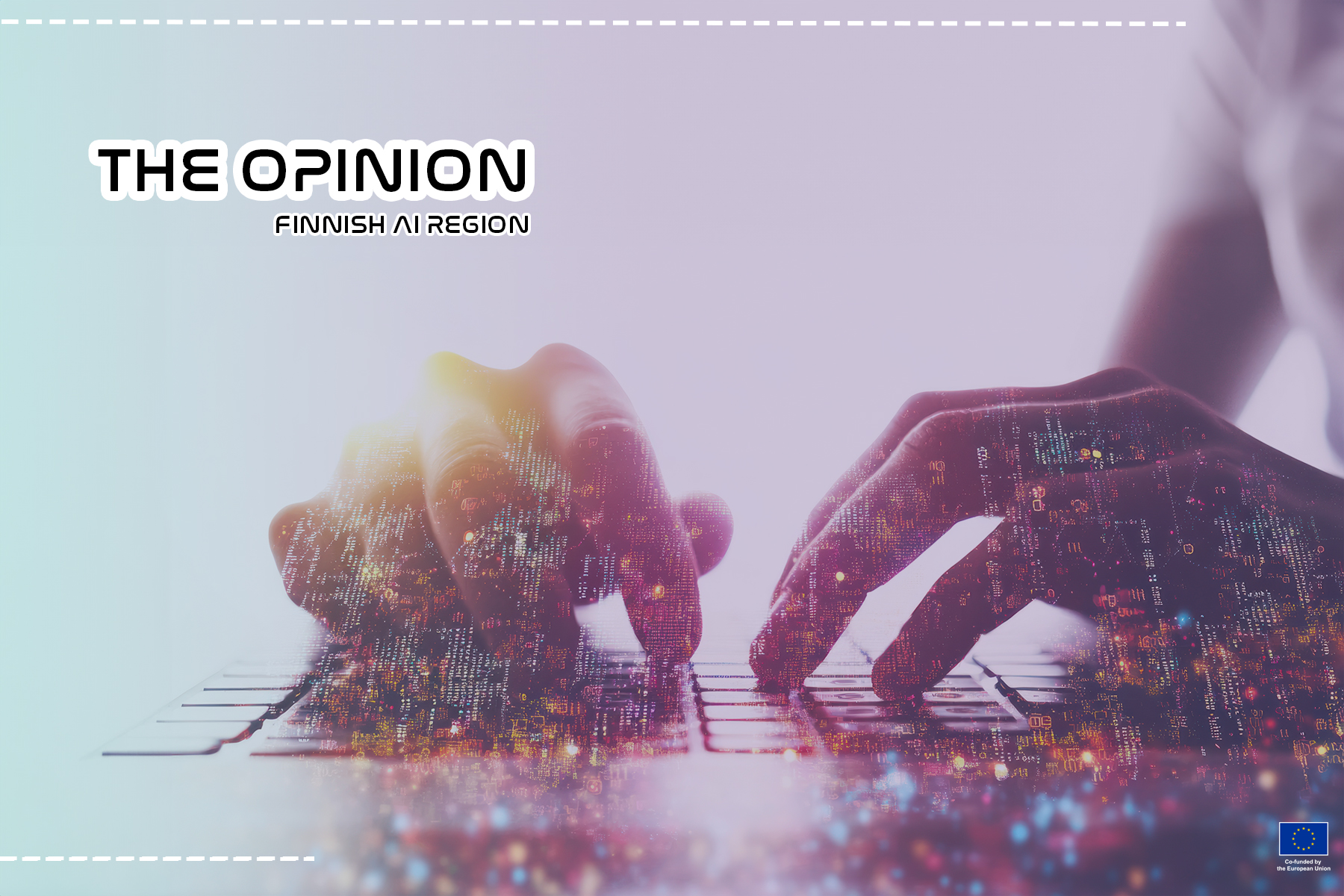
Text by Martti Asikainen, 8.7.2026 | Photo by Adobe Stock Photos
One in three Finnish leaders believes AI could, in future, outperform humans at strategic planning (Lahtinen et al., 2026). This isn’t technology hype or a figure plucked from thin air, it’s the finding of a recent survey that forces us to ask what leadership is actually made of. Attention usually turns to employees’ experiences of these systems, but leaders’ own views matter just as much.
Picture a board meeting where the strategy proposal doesn’t come from an external consultancy but from a language model. Not three scenarios someone bashed together in Excel over a couple of bleary-eyed late nights, but dozens of data-driven options generated in minutes. This is already happening in a good number of European expert organisations — and leaders themselves have noticed.
A project at Haaga-Helia University of Applied Sciences, The Machine as Manager: AI in Leading Expert and Knowledge Work, has been tracking the spread of algorithmic management in Finnish working life for several years now. It first mapped how widespread the phenomenon was among knowledge workers (Asikainen & Lahtinen, 2025). A Delphi study followed, examining how algorithmic management might reshape leadership in expert organisations by 2035 (Tuomi & Vuori, 2026).
Earlier research has focused largely on the platform economy and routine work, such as transport and delivery services. Haaga-Helia’s studies systematically widened that lens to knowledge-intensive expert work and senior leadership decision-making. A study conducted in spring 2026 set out to establish what AI actually means for leaders themselves, once it stops merely supporting their work and starts participating in what has traditionally been considered leadership’s last redoubt — strategic thinking (Lahtinen et al., 2026).
Where Employees Draw the Line
The question of accountability here doesn’t belong to any single leader or company. It’s structural. The same phenomenon doesn’t appear across dozens of organisations simultaneously because of individual HR decisions — it’s driven by developments across an entire industry and technology. No company has decided to adopt algorithmic management in a vacuum; all of them are responding to technological change, their competitive environment, and mounting pressure.
Data gathered in spring 2025 from more than 1,700 Finnish experts, professionals and leaders showed that nearly half had already encountered algorithmic management in some form most commonly through working-time tracking, task allocation, or performance measurement (Asikainen & Lahtinen, 2025). A human line manager was still the clear preference overall, and when it came to pay and other personal interactions in particular, employees weren’t willing to hand decision-making power to a machine.
Age turned out to be a surprisingly strong factor. Those under 40 were considerably more favourable towards machine management than their older colleagues, and correspondingly more willing to share sensitive data — such as wellbeing or voice data — in exchange for better monitoring of their working capacity. Those over 65, meanwhile, wanted above all to have a say in what kind of system got introduced in the first place (Asikainen & Lahtinen, 2025). What’s most interesting, though, isn’t which data employees were prepared to hand over, but where the line was drawn.
Clock-in records and skills histories were shared readily enough, but as many as two-thirds of respondents objected to video footage from their own workstation (Asikainen & Lahtinen, 2025). At the same time, the algorithm was often seen as fairer than a human precisely in controlling and incentivising tasks, where consistency counts for more than warmth (Asikainen & Lahtinen, 2025). Employees, in other words, don’t object to the machine on principle; they’re wary of it not knowing where the line between privacy and surveillance actually falls.
The upsides weren’t dismissed altogether, either: as many as 38 per cent of employees believed algorithmic management would have a positive effect on their own career development. The line, then, is not drawn between human and machine, but according to how much power each is given over privacy.
Fair, but Only If It's Transparent
The same tension — trust in data, but suspicion of opacity — resurfaces at the boardroom table, even though the questions there concern strategy rather than working-time tracking. A survey conducted in spring 2026, answered by 323 leaders in expert and knowledge work, found that 60 per cent perceive algorithmic management to be present in their own workplace to at least some degree, and 91 per cent identify its presence in at least one named leadership task (Lahtinen et al., 2026).
International research points in the same direction: a recent review synthesising 172 peer-reviewed studies shows that algorithmic management is entering a new phase; the centre of gravity is shifting from platform-economy transport and gig work (Uber, Wolt, Amazon, for instance) towards expert organisations and their strategic decision-making (Lippert et al., 2026). Haaga-Helia’s research, then, isn’t trailing the international conversation — it lands squarely at the turning point the whole field has identified.
The figures climb once we move into strategy work. According to Haaga-Helia’s survey, roughly 30 per cent of leaders believe a machine could outperform humans at strategic planning and forward-looking thinking (Lahtinen et al., 2026). Anna Lahtinen, senior researcher and project manager of The Machine as Manager project, describes the finding as surprising. She expected the machine to do well on number-crunching tasks, but hadn’t anticipated strategic thinking emerging quite so strongly (ibid.).
Algorithmic management’s clearest selling point appears to be fairness. As many as 73 per cent of leaders see it as a positive that the machine bases its decisions on data rather than personal relationships. On the other hand, AI’s potential to boost engagement or workplace wellbeing was rated as weak (ibid.). The results also suggest that gender, age or sector doesn’t meaningfully relate to trust in AI.
Frequency of use, however, does raise favourability towards it. The same pattern already showed up in the 2025 knowledge-worker survey (Asikainen & Lahtinen, 2025), and internationally, especially among those who have previously experienced human management as unfair (Moritz & Wehner, 2026).
This is worth treating with a healthy dose of caution, though. Rosenblat and Stark (2016) showed, in their study of Uber drivers a decade ago, that perceived fairness can be something of an illusion. An algorithm looks neutral because it doesn’t play favourites by name, but the power structure behind it — who sets the metrics, and on whose terms — still favours the system’s owner, not its user. There’s a second phenomenon at play here too. Taina Bucher (2018) calls this “pacifying the algorithm”: employees gradually learn to adjust their behaviour to what they believe the system is measuring, regardless of whether that reflects the actual quality of their work.
But more interesting than fairness is what leaders are not prepared to hand over to the machine. More than 80 per cent would rather work with an algorithm that’s 75 per cent accurate but comprehensible than one that’s 95 per cent accurate but a black box, a system whose decision-making process isn’t transparent to the user or the organisation (Lahtinen et al., 2026).
The distinction matters, because as Ananny and Crawford (2018) point out, seeing an algorithm isn’t the same as understanding it, and simply having access to a system’s logs doesn’t in itself explain why it arrived at a particular recommendation or conclusion. Accuracy alone isn’t enough, then — leaders also want to understand what’s actually going on, even at the cost of a less accurate result.
Not Replacement, but a Shift
At this point it would be easy to plant a flag in one of two camps: either the machine takes the leader’s job, or humans are irreplaceable and nothing changes. Both conclusions strike me as too simple. In the international literature, the concept of “hybrid upper echelons” is beginning to take hold — models in which AI doesn’t replace senior leadership decision-making but changes its nature, shifting the leader’s role from generating options towards evaluating, prioritising and responsibly steering them.
The theory is based on Donald C. Hambrick and Phyllis A. Mason’s (1984) celebrated upper echelons theory, one of the cornerstones of strategic management. The theory holds that an organisation’s strategic choices reflect the cognitive limitations, values and experiential background of its leaders — and it is precisely into this human filter that hybrid models now introduce artificial intelligence, as a new but not a replacing element.
The same idea recurs in Haaga-Helia’s Delphi study, which involved 34 Finnish experts and leaders. Its participants didn’t foresee leadership shifting to machines entirely, but rather converged on an assessment of human–AI collaboration (Tuomi & Vuori, 2026). A broad systematic review categorises algorithmic management into four modes of use: supervisory, directive, complementary, and collaborative (Chen et al., 2026). As far as I can tell, Finnish strategy work is moving towards precisely the latter two.
That doesn’t mean the shift is painless or risk-free, however. The further algorithms push into the heart of decision-making, the harder it becomes to pin down who ultimately answers for the consequences. Earlier research into algorithmic power in the platform economy has shown just how easily accountability blurs when the system making the decisions is simultaneously invisible and everywhere (Kellogg et al., 2020; Möhlmann et al., 2023; Vuori & Asikainen, 2025). The risk doesn’t vanish just because the setting shifts from the platform economy to the boardroom, or to managing a specialist function.
The EU’s AI Act attempts to address this through its requirement for human oversight. In practice, that means the use of such systems can’t mean a person forfeits the ability to assess and challenge a machine-generated solution (EU, 2024). The requirement is clear enough in principle, but far harder to implement in practice, since a person’s merely formal presence in a decision-making process doesn’t yet guarantee they have any real understanding of, or power to intervene in, the machine’s proposal. This requirement applies in particular to high-risk AI systems, a category that can include systems supporting HR decisions in working life.
A Step Worth Taking Seriously
Numbers like these don’t describe individual organisations’ choices so much as the fact that the practice has had time to become normalised before it’s been properly discussed. Nor is the phenomenon a uniquely Finnish quirk. According to the OECD (2025), for instance, 90 per cent of American and 79 per cent of European companies already use some form of algorithmic management system.
Finland offers an interesting testing ground for research into algorithmic management. Working life is heavily expert-driven, digital maturity is high by international standards, and organisations adopt AI quickly. Finnish leaders’ views, then, don’t just describe domestic working life — they may well be a leading indicator for developments elsewhere in Europe too. Taken together, these survey findings paint a picture that’s unusual even by international standards: the same phenomenon has now been mapped from both the managed and the managing side, within the same expert setting. Most research into algorithmic management to date has examined only one side at a time, most often platform-economy workers.
The Finnish dataset allows for comparison, if only partially. That comparison offers no reassuring conclusion that everything will be fine as long as we simply trust the technology. Instead, it raises a sharper question: what kind of judgement, transparency and division of responsibility should an organisation build as analytical work moves to the machine — while value judgements cannot. Next time your leadership team is handed an algorithm-generated strategic option, the question worth asking isn’t only whether it’s accurate, but whether anyone in the room understands what it’s based on — and who’s prepared to push back against it.
Author

Martti Asikainen
Communications Lead
+358 44 920 7374
martti.asikainen@haaga-helia.fi
This article was produced as part of the RoboBoss – AI in the Leadership of Expert and Knowledge Work project, funded by Haaga-Helia University of Applied Sciences and the Finnish Work Environment Fund.
References
Ananny, M., & Crawford, K. (2018). Seeing without knowing: Limitations of the transparency ideal and its application to algorithmic accountability. New Media & Society, 20(3), 973–989.
Asikainen, M. & Lahtinen, A. (2025, 16 June). Algoritmijohtaminen yleistyy suomalaisilla työpaikoilla – nuoret suhtautuvat iäkkäämpiä myönteisemmin. Haaga-Helia University of Applied Sciences. Retrieved 2 July 2026.
Bucher, T. (2018). If… then: Algorithmic power and politics. Oxford University Press. Oxford.
Chen, W., Li, A., Pan, C., Yu, T., Ali, A. & Sun, Y. (2026). Algorithmic management in the workplace: A systematic review and topic modeling integration using BERTopic. International Journal of Information Management, 86, Article 102994. https://doi.org/10.1016/j.ijinfomgt.2025.102994
European Union (2024). Regulation (EU) 2024/1689 of the European Parliament and of the Council on artificial intelligence (AI Act). Official Journal of the European Union.
Hambrick, D. C., & Mason, P. A. (1984). Upper echelons: The organization as a reflection of its top managers. Academy of Management Review, 9(2), 193–206. https://doi.org/10.5465/amr.1984.4277628
Kellogg, K. C., Valentine, M. A., & Christin, A. (2020). Algorithms at work: The new contested terrain of control. Academy of Management Annals, 14(1), 366–410.
Lahtinen, A., Kauttonen, J., Keurulainen, M. & Asikainen, M. (2026, 10 June). Joka kolmas johtaja uskoo tekoälyn päihittävän ihmisen strategiatyössä – uusi tutkimus paljastaa algoritmijohtamisen realiteetit. Haaga-Helia University of Applied Sciences. STT Info. Retrieved 1 July 2026.
Lippert, I., Alizadeh, A., Tarafdar, M., Mohlmann, M., Benlian, A., Parent-Rocheleau, X. & Stein, M-K. (2026). One Decade of Algorithmic Management Research. Bus Inf Syst Eng. https://doi.org/10.1007/s12599-026-00995-1
Moritz, J.M. & Wehner, M.C. (2026). Justice Evaluations of Algorithmic Management: The Role of Prior Discrimination Experience. Bus Inf Syst Eng. https://doi.org/10.1007/s12599-026-01002-3
OECD (2025). Algorithmic management in the workplace: New evidence from an OECD employer survey. OECD Publishing. Paris.
Rosenblat, A., & Stark, L. (2016). Algorithmic labor and information asymmetries: A case study of Uber drivers. International Journal of Communication, 10, 3758–3784.
Tuomi, A. & Vuori, J. (2026, 1 June). Algorithmic management in the context of organizational leadership and expert work: A Delphi study. Finnish Business Review. Jyväskylä University of Applied Scienses.
Vuori, J. & Asikainen, M. (2025, 17 July). Kun algoritmi astuu pomon saappaisiin – algoritminen johtaminen työn murroksessa. Finnish AI Region. Retrieved 2 July 2026.