From Pilot Ideas to Real Urban Testing: How FAIR EDIH Connects Companies with Cities
Cities are turning their streets, sensors and data platforms into live laboratories — and FAIR is the door companies can knock on to get in. From Helsinki’s mobility trials to a Tallinn model that shares a single pilot application across five cities at once, the service offers a structured route from prototype to proof, without promising a shortcut round procurement.
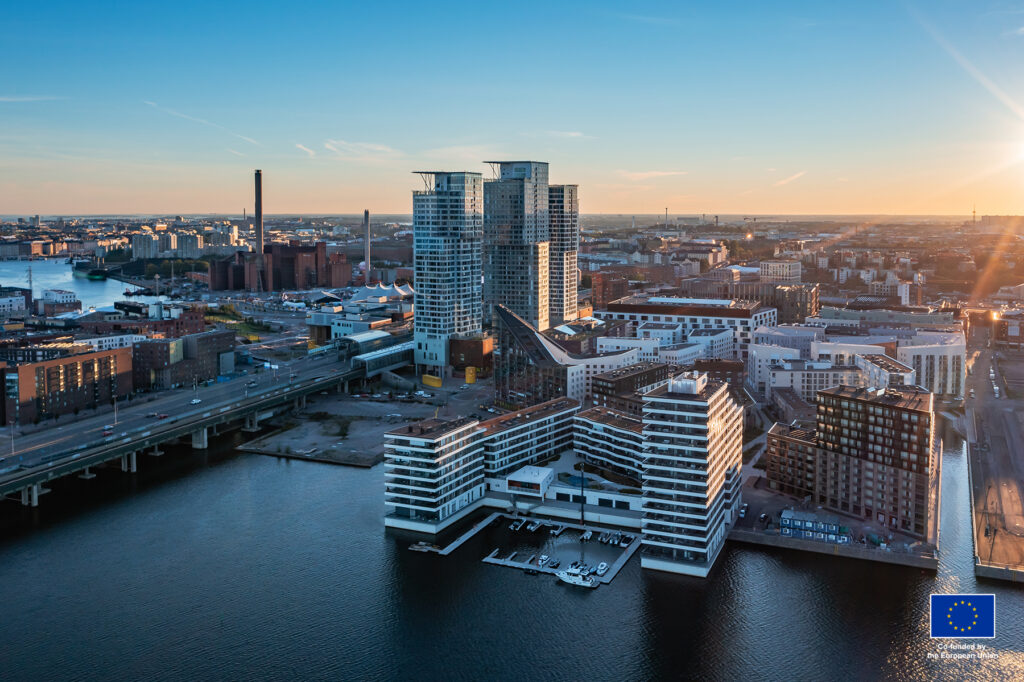
Text by Solja Sulkunen, 7.7.2026 | Photo by Adobe Stock Photos

Cities across Europe are increasingly opening their environments as real-world testing platforms for innovation. At the same time, companies developing solutions based on advanced technologies (i.e. artificial intelligence, AI), extended reality (XR), and cybersecurity) face a familiar challenge: how to validate their technologies in complex, real-life urban settings where scale, data, and users truly matter. This is an important step in increasing a solution’s technological maturity level.
Finnish AI Region (FAIR) addresses this gap by offering a structured service that connects companies with cities and their test environments. The goal is simple but powerful: to support companies in accessing the testing programmes and innovation challenges of different cities to refine and validate their solutions in authentic urban contexts.
A Service Built for AI, XR, and Cybersecurity Testing
FAIR operations and services are specifically designed for companies developing advanced digital solutions that need support in real-world validation. The solutions to be tested include AI-driven platforms, analytics and automation, XR-based environments such as simulations or digital twins, and cybersecurity technologies protecting critical infrastructure and data ecosystems.
What makes the service unique is not just an in-depth view of different cities and their priorities, but a broadened understanding of the available live urban platforms, including physical spaces, data platforms, and operational environments where solutions can be tested under real conditions.
As highlighted in the NewNordic City Testbed concept, cities offer a combination of physical and digital infrastructure, from built environments and energy systems to IoT networks and data platforms, forming a shared experimentation network.
Helsinki and Espoo: Structured Entry Points with Existing Pathways
Within FAIR, Helsinki and Espoo act as core cities, each with mature innovation ecosystems and established collaboration models.
Both cities operate their own pilot application processes, typically aligned with specific domains such as smart mobility, urban sustainability, health, or education. These processes allow companies to propose pilots directly linked to city strategies and operational needs.
In addition, both cities regularly launch innovation challenges, where companies are invited to respond to clearly defined problems or development priorities within specific sectors. These challenges create targeted opportunities for collaboration and experimentation.
FAIR plays a coordinating role for advanced digital solutions across these pathways. Companies entering through the service are:
- guided toward relevant city-specific pilot processes
- informed about upcoming or open innovation challenges
- supported in aligning their proposals with city priorities
This ensures that companies are not navigating the system blindly but are instead positioned strategically from the outset.
Expanding the Scope: A Network of Partner Cities
Beyond Helsinki and Espoo, the service extends to a broader network of partner cities, including Tampere, Vantaa, and Tallinn. This multi-city collaboration reflects a shift from isolated pilots toward more coordinated and scalable experimentation models. There are various ways for businesses to connect with this network, one of which is applying through FAIR.
Alternative ways do exist, however. A particularly interesting development can be seen in Tallinn, where the city itself has introduced a model that allows companies to request that their pilot application be shared with other cities.
Through this approach, a single application submitted to Tallinn can be distributed to four additional cities, significantly expanding the potential reach of the proposal without additional administrative burden.
This aligns with the broader NewNordic principle of “one application, multiple cities”, which aims to streamline access to urban testbeds and reduce fragmentation in innovation processes.
A Guided Process from Idea to City Feedback and Piloting Opportunities
FAIR supports companies through a structured journey that helps transform an initial idea into a city-ready pilot proposal:
1. Apply. Companies describe their solution, use case, and testing needs in the form of a detailed pilot application, suitable for city-level evaluation.
2. Review. Applications are assessed across multiple cities based on strategic relevance and feasibility.
3. Feedback.FAIR puts together consolidated input from the city representatives on both the solution and the proposed pilot, helping the company improve its approach.
4. Next step. Promising proposals are directed toward city-specific processes or testing opportunities.
1.
Apply. Companies describe their solution, use case, and testing needs in the form of a detailed pilot application, suitable for city-level evaluation.
2.
Review. Applications are assessed across multiple cities based on strategic relevance and feasibility.
3.
Feedback. FAIR puts together consolidated input from the city representatives on both the solution and the proposed pilot, helping the company improve its approach.
4.
Next step. Promising proposals are directed toward city-specific processes or testing opportunities.
This structured approach mirrors the broader testbed model in which companies receive consolidated feedback and support in accessing relevant ecosystems.
No Guaranteed Pilots, but Valuable Outcomes
An important aspect of the FAIR model is realism. Submitting a pilot application does not guarantee access to a city pilot. Each proposal is evaluated individually, based on the priorities, resources, and strategic focus of each city. In any case, the pilots are not a gateway to procurement.
Cities handle all procurement through specifically assigned channels and processes. However, the pilots can be used as references when participating in relevant procurement calls.
However, even when a pilot is not immediately realised, companies benefit from the process. They receive concrete feedback on both their solution and their application, as well as guidance on how city-specific processes work in practice. This reduces uncertainty and helps companies better prepare for future opportunities.
Beyond Cities: Connecting to the European AI Ecosystem
FAIR operates as part of the wider European Digital Innovation Hub network, which means that its value extends well beyond city-level pilots.
Companies engaging with the service are introduced to a broader ecosystem of support aligned with the EU’s AI strategy. This includes access to testing and experimentation facilities, advisory services, training opportunities, and connections to European-scale infrastructures supporting AI deployment and innovation.
In practice, this creates a dual pathway where companies can validate their solutions locally in urban environments, while simultaneously building capabilities and connections that support scaling at the European level.
Towards More Scalable Urban Innovation
The FAIR model reflects an important evolution in how cities and companies collaborate. Instead of fragmented, one-off pilots, it promotes a more coordinated, transparent, and scalable approach to experimentation.
By combining access to real urban environments, structured multi-city collaboration, and connections to European innovation infrastructure, the model lowers the barriers for companies to engage with cities, while still ensuring that experimentation remains meaningful and aligned with public sector needs.
For companies working at the forefront of AI, XR, and cybersecurity, this creates something essential: not just a place to test, but a pathway to relevance, adoption, and scale.
Check for open innovation challenges from Helsinki and Espoo