

Espoo startup raises €2.6m to build superconducting transistors, targeting quantum computing's scaling bottleneck
S-Transistors, spun out of Finnish research institute VTT, says its new class of transistor could let quantum computers control qubits from inside the cryostat rather than through external wiring — a problem the industry has yet to solve at scale.
Text by Martti Asikainen, 31.8.2026 | Photo by S-Transistors
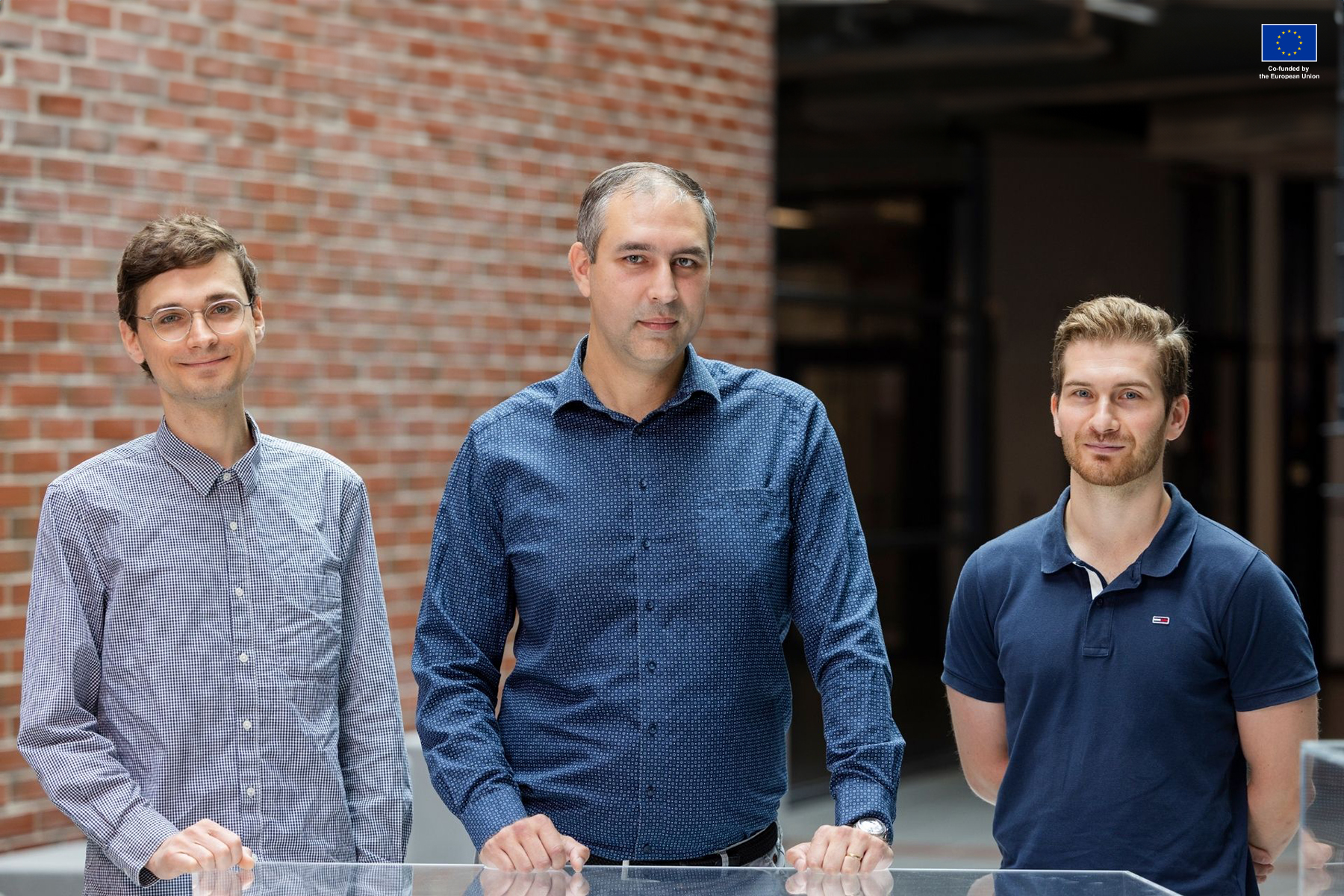
Finnish startup S-Transistors has raised €2.6 million in pre-seed funding to develop superconducting transistors, a technology it says could remove one of the central obstacles to building larger quantum computers, according to a press release issued by VTT Technical Research Centre of Finland on 31 August.
The round was led by Lifeline Ventures, a Nordic venture capital firm, with participation from an unnamed angel investor. The company, founded by researchers from VTT, will use the funding to build product prototypes, set up a cryogenic laboratory, establish a manufacturing pilot line, and expand its team, the release states.
Why cabling limits qubits
Superconducting quantum computers must be kept at extremely low temperatures to preserve the fragile quantum states of their qubits — the basic units of quantum information. Controlling those qubits currently requires multiple cables running from each one, out of the cryostat, to room-temperature electronics.
That wiring approach becomes increasingly impractical as the number of qubits grows, according to the company. Moving control electronics inside the cryostat, closer to the quantum chip, could ease the bottleneck, but conventional silicon transistors struggle to combine the necessary speed with the low power consumption the cold environment demands. Excess heat from the electronics risks disrupting the qubits’ fragile state.
“The clearest path forward for superconducting quantum computers is to bring the classical control and interface hardware down into the cryostat,” said Heorhii Bohuslavskyi, co-founder and chief executive of S-Transistors. He said existing components were too demanding on power dissipation, speed and energy efficiency to make that integration work — a gap he said the company’s superconducting transistors are designed to fill.
From lab to wafer scale
S-Transistors says its superconducting transistors are already available at wafer scale — a manufacturing benchmark indicating the devices can be produced in volume rather than only as laboratory prototypes. The company’s first commercial product will be a multiplexer, a switching device that plugs into existing cryogenic setups, intended to ship to early customers within its first year of operation.
Andrey Generalov, the company’s co-founder and chief technology officer, described the longer-term ambition as a “quantum motherboard” — a platform operating at millikelvin temperatures that would control an entire quantum processor from within the cold environment. The multiplexer, he said, is a first step towards that goal rather than the goal itself.
Jyri Engeström, a partner at Lifeline Ventures, said the company was built around technology that could become “a critical part of the hardware stack” as quantum computers scale toward commercially useful sizes. Erja Turunen, executive vice president at VTT, said the institute would continue working with S-Transistors as the company moves toward manufacturing.
An early-stage bet on unproven scale
The €2.6 million round is a pre-seed investment, the earliest stage of startup funding, and the company’s core product has not yet shipped to a customer.
The superconducting transistor concept was first theorised in the 1980s; what S-Transistors is proposing is a reproducible, manufacturable version of an idea that has taken decades to reach this point.
Whether the technology performs at the scale needed for hundreds of thousands of qubits, the range researchers say full-scale quantum computing will eventually require, remains untested outside the company’s own claims.