

Nokia and ICEYE to build a government-owned low-orbit satellite communications system
Nokia and Finnish satellite company ICEYE have announced a partnership to develop a secure, sovereign satellite communications system for governments and defence customers. The first communications satellites are due to be launched as early as 2028.
Martti Asikainen | 2.10.2026| Photo by ICEYE/NOKIA
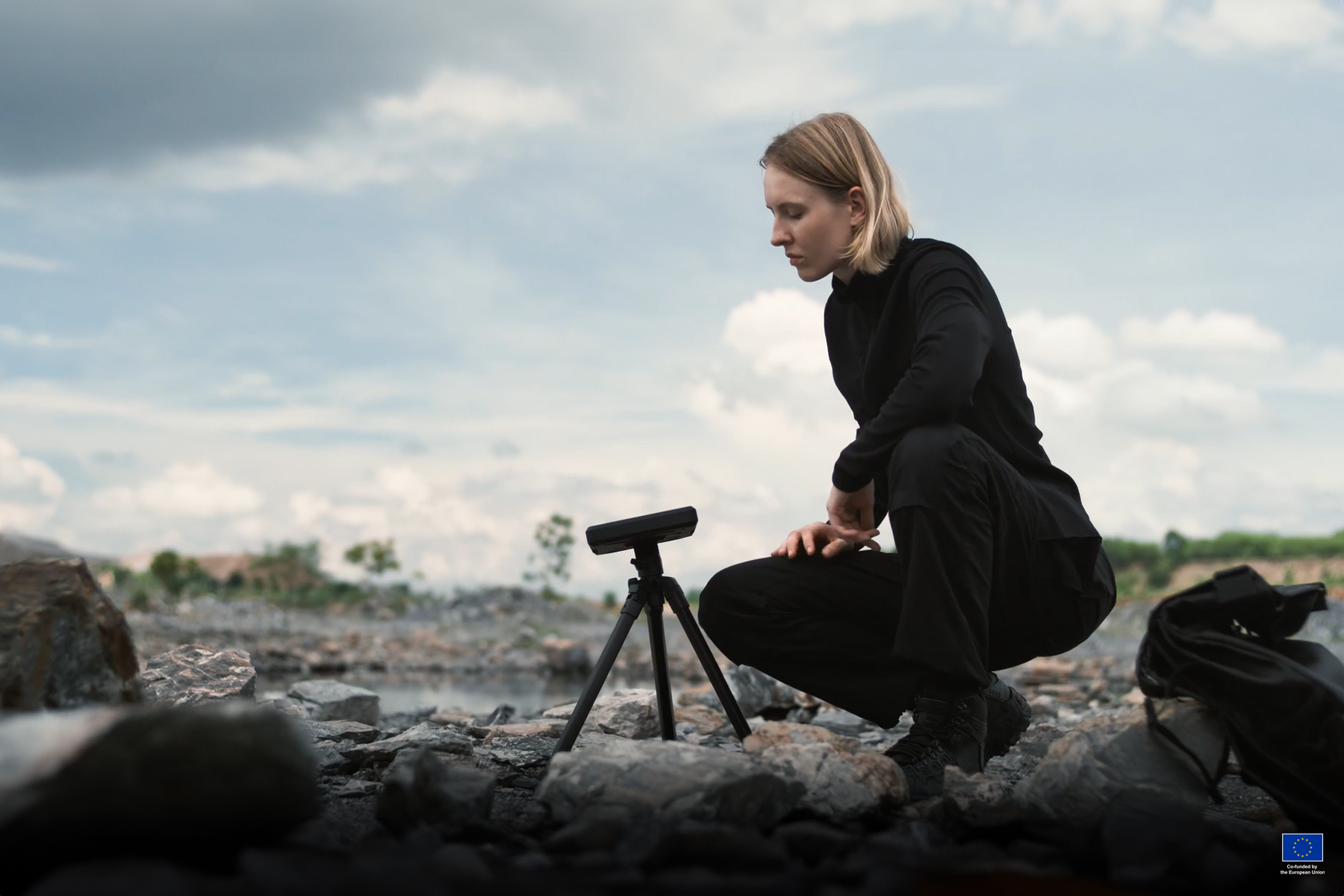
Communications technology company Nokia and satellite company ICEYE are joining forces in satellite communications. According to their joint press release, the aim is to provide governments with secure, high-performance broadband connectivity delivered via satellites in low Earth orbit (LEO) and kept under the governments’ own control.
The system is designed to serve needs such as defence, border security, emergency services and disaster response. According to Nokia and ICEYE, it will not replace existing communications networks but complement them in situations where conventional networks are unavailable for whatever reason.
The market is dominated by Starlink, run by Elon Musk‘s SpaceX, which operates around 90 per cent of all active low-orbit internet satellites and accounts for some 97 per cent of global satellite internet speed tests. Starlink passed 10 million customers worldwide in early 2026.
The Nokia–ICEYE project is positioned specifically as a sovereign alternative to Starlink. Governments would own and operate the system themselves, meaning they would not be dependent on the infrastructure of a single private company.
Two areas of expertise combined
The partnership combines ICEYE’s expertise in building and operating satellites with Nokia’s secure networking technology and growing defence business. The companies will develop the satellites, ground infrastructure and field terminals into a single integrated system.
In a joint interview with Bloomberg, ICEYE’s CEO and co-founder Rafal Modrzewski and Nokia’s CEO Justin Hotard said they are aiming to launch as many as 50 satellites a year from 2028 onwards. The timeline is tight, but entirely achievable.
Modrzewski points out that ICEYE built Poland its own radar satellite system in under a year. He also stresses that nations must be able to fully own and control their communications, and should never be wholly dependent on the terms of service of a foreign commercial operator.
“Together with Nokia, we are building on our proven space intelligence expertise and bringing sovereign, high-performance satellite communications to market,” Modrzewski said in the press release.
Nokia’s CEO Hotard emphasised the importance of secure and resilient connectivity for national sovereignty. According to him, the solution complements terrestrial networks and gives nations the situational awareness, connectivity and control they need to operate in crisis and conflict environments.
“Sovereign operations depend on the ability to sense, decide and act in real time. Physical AI makes that possible, but only with secure, resilient connectivity across land, sea, air and space,” he said.
On stage at the Helsinki Security Forum
Modrzewski and Hotard will appear together at the Helsinki Security Forum on Friday 2 October, the day after the partnership was announced. The live-streamed panel focuses on Europe’s technological sovereignty, which is precisely the issue the companies’ project seeks to address. Europe relies heavily on non-European providers for its critical space and communications infrastructure, and this dependency has become an increasingly pressing question for governments.
ICEYE was founded in 2014 as a spin-off from Aalto University and now has more than 1,000 employees. According to the company, it operates the world’s largest constellation of radar satellites. Unlike optical satellites, radar satellites can image the Earth’s surface in any weather, day or night. ICEYE’s customers include defence and intelligence organisations, insurance companies and rescue authorities.
Espoo-based Nokia is one of the world’s leading network infrastructure providers. Justin Hotard became the company’s CEO in 2025. Under his leadership, Nokia has focused increasingly on secure networks and AI infrastructure, and its defence business has grown in recent years.