One in three Nordic healthcare AI projects is now in everyday use
The first large-scale map of AI in Nordic healthcare shows that around a third of more than 800 projects have moved beyond the trial stage and into regular use, in areas ranging from administrative support to preventive care.
Martti Asikainen | 3.10.2026 | Photo by DC Studio / Adobe Stock Photos
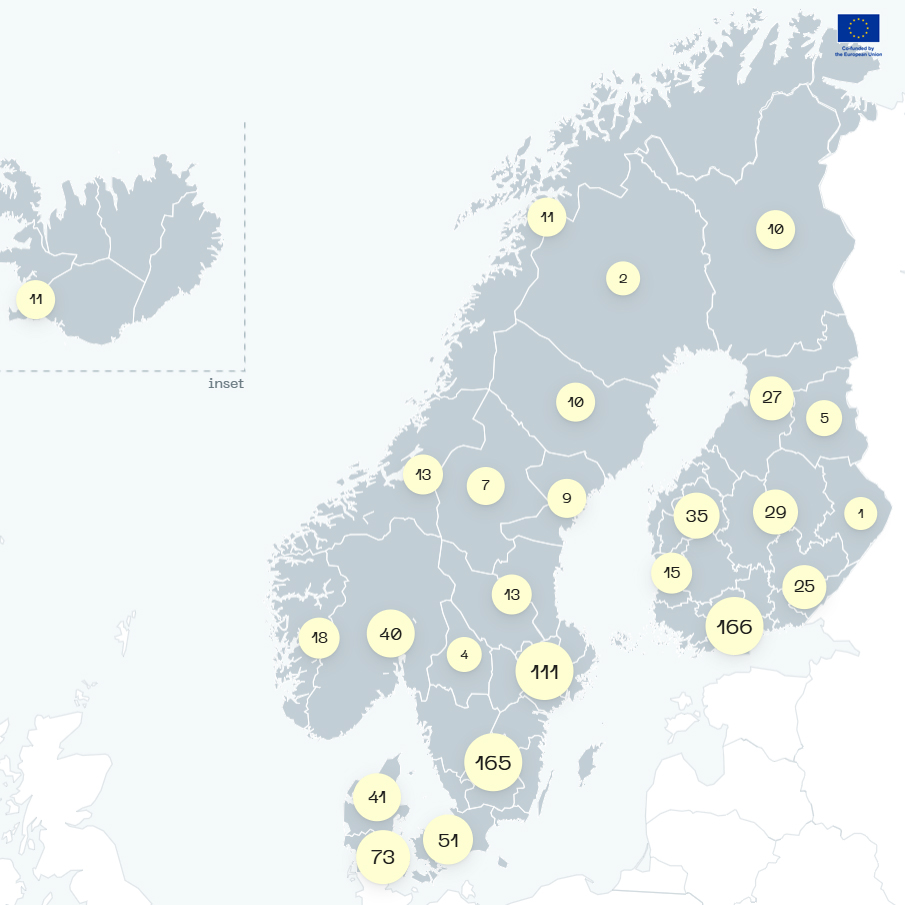
AI is no longer an experiment in Nordic healthcare. That is the key finding of the Nordic AI Health Map, published by the New Nordics AI project and based on a survey carried out in spring 2026.
The map covers more than 800 AI projects in publicly funded healthcare across Sweden, Norway, Denmark, Finland and Iceland. Each project has been classified by one of eight use cases and by its stage of development: concept, pilot or production.
The work was supported by the Nordic Council of Ministers’ eHealth group, with national bodies coordinating data collection in each country. In Finland, the wellbeing services counties gathered the data through the national SOTE ecosystem, led by the Ministry of Social Affairs and Health and UNA.
In Denmark, Danish Regions and CAI-X coordinated the effort, and in Sweden, AI Sweden worked alongside the Swedish eHealth Agency.
Clinical care and diagnostics lead the way
Clinical care and diagnostics is both the most common area of use and the one with the most fully implemented solutions. Administrative support for staff comes second.
The applications are practical. For example, speech recognition frees up clinicians’ time, image analysis supports radiologists across multiple sites, and automated monitoring cuts down on routine work.
Priorities differ between countries. Finland uses AI most for administrative support, while Denmark has a stronger focus on preventive care.
These differences suggest that each country is turning to AI to meet its own particular needs. They also show that many projects across the region are still at the pilot or concept stage.
This is the first version of the map, and it will be updated and expanded over the coming year. The map is freely available to explore on the New Nordics AI website.
From local success to shared solutions
The project was led by Lorna Bartram, a strategist at AI Sweden, who says the map offers concrete evidence that AI has become a working part of Nordic healthcare.
“AI in healthcare is no longer just an opportunity or a vision of the future. A significant proportion of the solutions we surveyed are already in daily use. What matters now is finding ways to make effective solutions available to everyone and identifying the applications that genuinely deliver value,” she says.
Cecilia Leveaux, a board member of New Nordics AI, stresses the value of a shared overview, which makes it easier to spot what works and spread it quickly across the region.
Annemieke Ålenius, chair of the Nordic Council of Ministers’ eHealth group, sees considerable potential in closer cooperation, particularly as countries implement new EU legislation such as the European Health Data Space (EHDS) and the AI Act.