

VTT: Finland should turn physical AI into export products of its own
Finland should not simply buy new digital technologies from abroad, writes Erja Turunen of VTT. She sees physical AI, meaning AI in robots, machines and vehicles, as the next wave of digital change, and says the next generation of AI chips could come from Finland.
Martti Asikainen | 23.11.2026 | Photo by Tiina Nykänen / VTT
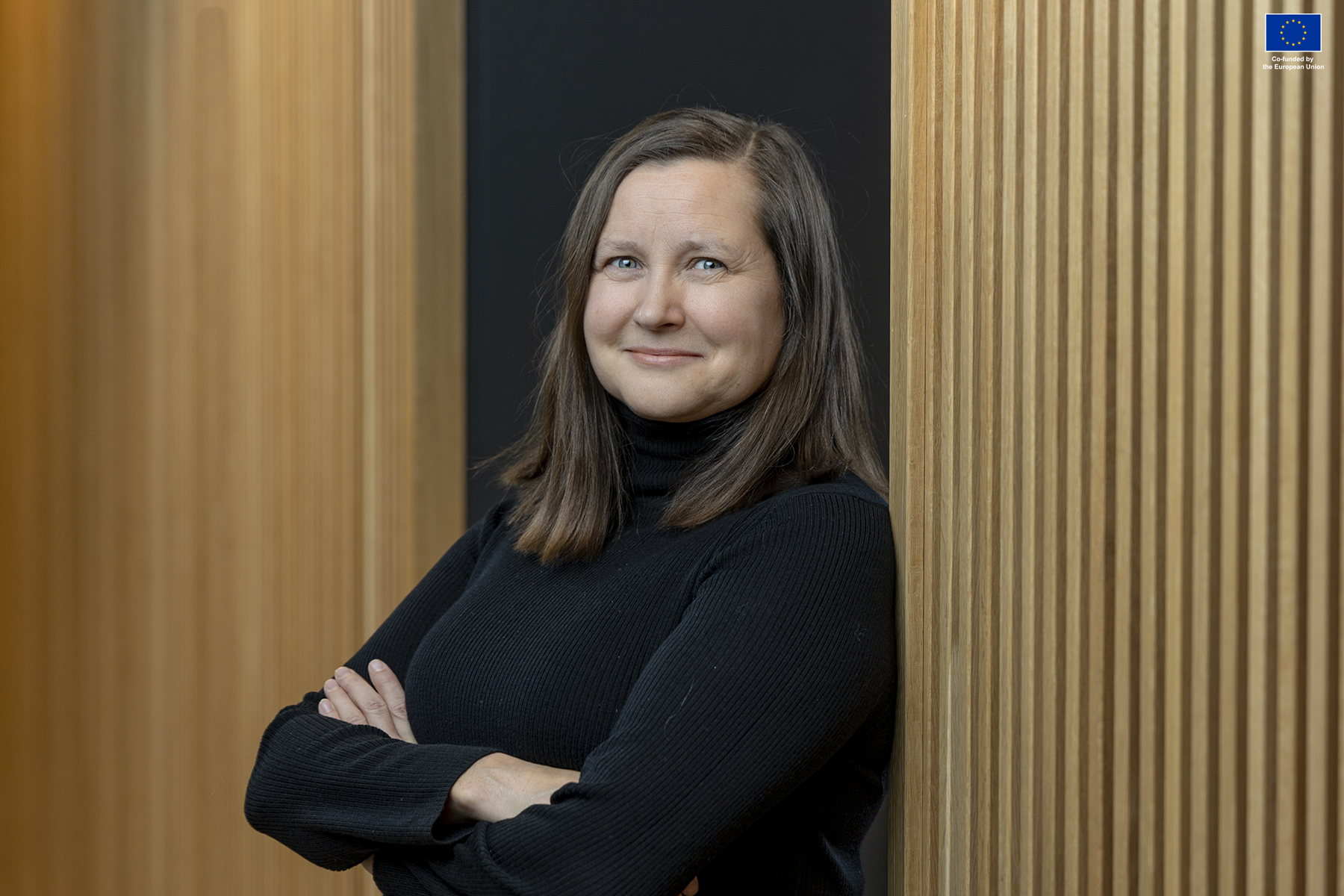
Finland should build its own export products from new digital technologies and not just buy them from abroad, writes Erja Turunen, Executive Vice President for Digital systems at VTT Technical Research Centre of Finland. In a blog post on VTT’s website, she names physical AI as the next wave of digital transformation. The country already has internationally successful companies developing digital systems for industry, health technology and resilience, she says, and their solutions lay the groundwork for Europe’s next industrial leap.
Machines that sense and act
In industry, physical AI helps machines perceive their surroundings, interpret information and act on it, Turunen writes. She says AI speeds up the development of applications that make machinery and robots safer, help to foresee production disruptions and support more personalised care. Physical AI solutions are already on sale in consumer markets. Finland should focus on robots, humanoids, autonomous machines, vehicles, drones and embedded systems for industrial equipment, she argues. Its particular strength, she writes, is finding solutions for devices that work even in harsh conditions.
The idea has support elsewhere. Sitra, the cities of Espoo, Oulu, Tampere and Turku, the University of Oulu, VTT, AI Finland and other partners have started a project to identify Finland’s strongest opportunities in physical AI. Sitra describes physical AI as AI used in robots, machines and other physical systems. It says markets and value chains in many areas are still forming, so competitive positions are not yet fixed. VTT has also set up a physical AI research area, which covers robotics, autonomous systems, sensing and AI-based decision-making, according to posts by VTT staff.
Sensors, chips and secure connections
Intelligent machines depend on sensors, chips, embedded software and reliable control systems, Turunen writes. Processing sensor data on or near the device, known as edge computing, allows faster responses and uses less energy. Secure communications links then connect the device to a wider system and carry data in real time. She sees opportunities for Finnish companies as developers of sensors, software and end-to-end solutions.
Different technologies also work together, she says. Microelectronics and AI lay the foundations for intelligent devices and quantum technology. AI learns from data, and high-performance computing simulates and optimises systems. In future, quantum computing will complement them in tasks where classical methods reach their limits, such as modelling materials and chemical processes. Digital systems can make industry faster, more precise, more energy-efficient and more reliable, she writes, and make healthcare more predictive, personalised and accessible.
From the lab to the factory
Finland has strong expertise in microelectronics, photonics, telecommunications, high-performance computing and quantum technologies, Turunen writes. She says businesses and research organisations should now turn it into commercial solutions. The step from the laboratory to commercial manufacturing is critical, and it takes a joint effort to develop research and piloting environments, expertise and partnerships. VTT brings technologies together and helps scale up scientific breakthroughs for manufacturing and commercialisation, she says.
She points to Micronova, the centre for micro- and nanotechnology, as a bold decision that has helped internationally successful companies to grow. Finland needs the same ambition now to create new business, she writes. The City of Espoo, which takes part in Sitra’s project, is one of the partner organisations of Finnish AI Region, which offers businesses expertise in artificial intelligence, augmented reality, high-performance computing and cyber security.