Skip to content
Person finding a key and running through the lock hole. Represents a person finding solutions for job disruption.

You Know AI Is Coming. Here’s How You Can Actually Prepare

In our first article, we showed that AI’s impact will be felt most acutely in office work, not just tech jobs. But awareness alone won’t protect your organisation. The companies and regions that thrive in the years ahead won’t be those with the lowest AI exposure — they’ll be the ones that prepare now. Here’s how to start.

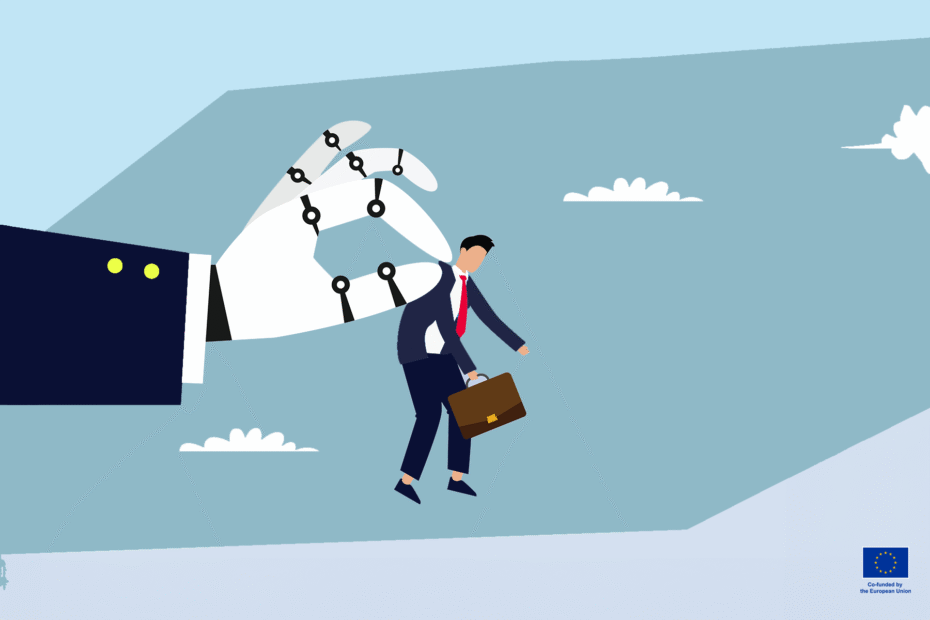
robot hand taking a man in a suit and bringing him away

Achtung! Your Job Might Be in the Hidden AI Risk Zone

The AI disruption everyone’s talking about? You’re probably looking in the wrong place. New research from MIT shows the real impact won’t hit tech jobs first—it’s already reshaping the office and administrative work that exists in nearly every organisation. This article reveals where AI’s hidden risk zone really is. Our next article shows you how to prepare before it’s too late.

Agentic AI Business Meeting Futuristic Tech Collaboration in Dig

What if You Become a Team or an Entire Company? The Promise of Digital Twins in the Transformation of Working Life

The future of work may not be about replacing humans with machines, but multiplying human capacity through digital twins that work simultaneously across multiple tasks. This transformation promises unprecedented productivity gains, but raises profound questions about compensation, ownership, and labour rights when one worker can do the work of five.

Magician on the stage. Behind you can see a shape of EU flag and map.

Point of View: Transparency or Magic Tricks? The EU AI Act in Turbulent Waters

The EU AI Act seeks to bring order to a field that has transformed into the Wild West of artificial intelligence. Yet its transparency requirements collide with a fundamental question about the boundary between deception and artistic freedom. Humanity has always used artificial means to enhance storytelling, and synthetic media can, at its best, enrich culture, if regulation can distinguish context and purpose from the technology itself.