

Nokia beats profit forecasts as AI and cloud demand doubles, but rising chip costs cloud outlook
The Finnish telecoms equipment maker raised its full-year profit guidance after AI and cloud customer sales surged, even as memory chip shortages pushed up costs across the industry and restructuring charges pulled reported profit into a loss.
Text by Martti Asikainen, 23.7.2026 | Photo by Nokia
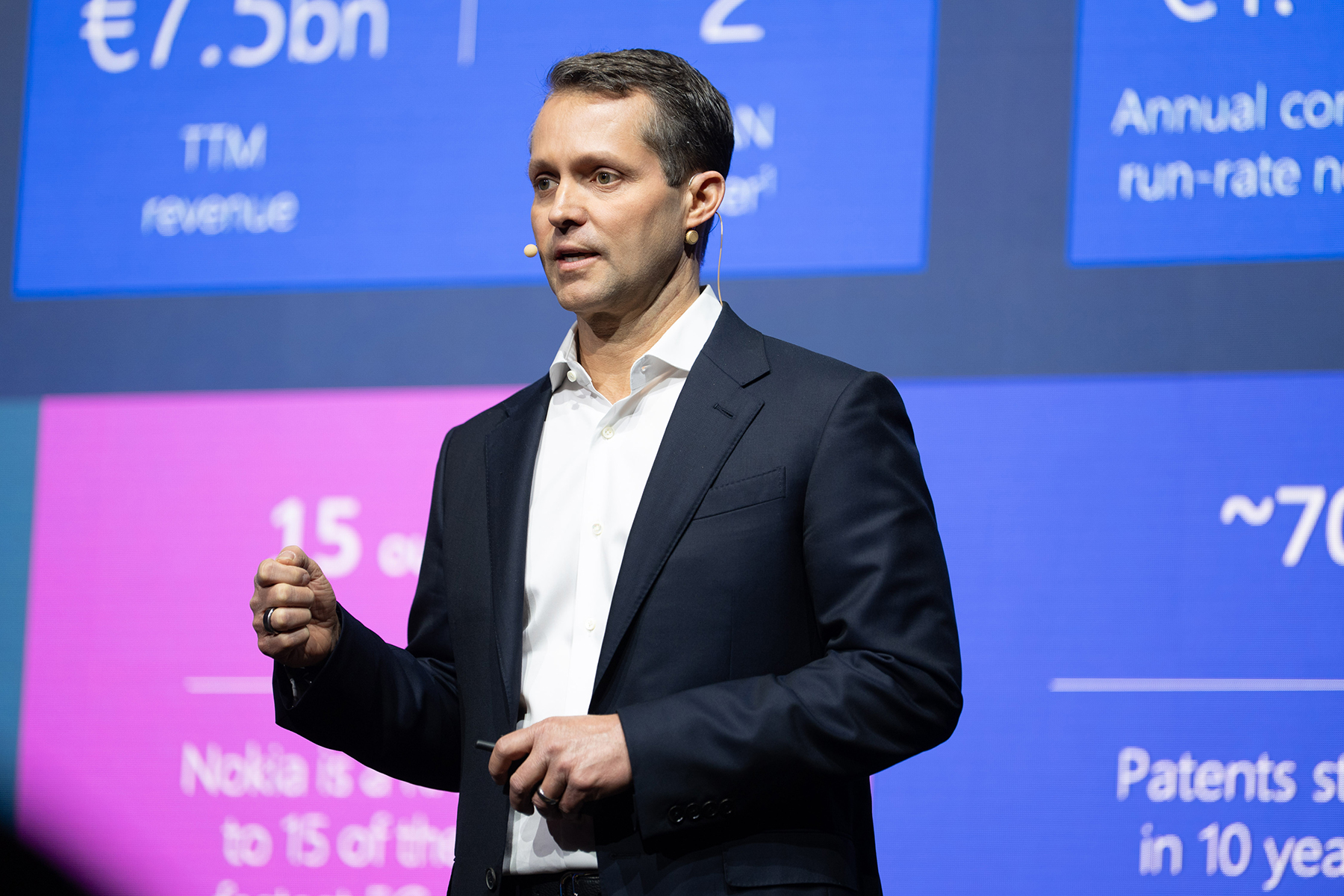
Nokia reported comparable operating profit of €434 million for the second quarter of 2026, an 18% rise on the same period last year, and net sales of €4.82 billion, up 8% year-on-year as reported and 9% on a constant currency basis. Both figures came in ahead of analyst expectations, with comparable operating profit beating the €382 million average estimate from analysts polled by LSEG.
The Espoo-based group has increasingly shifted its focus toward selling optical and IP networking equipment to large technology companies building AI data centres, a pivot that underpins much of the growth reported this quarter. Nokia said it expects that momentum to continue, even as it faces cost pressures elsewhere in its supply chain. You can read more about Nokia’s latest announcement here.
AI and cloud sales more than double
Network Infrastructure net sales grew 12% year-on-year at constant currencies, led by 20% growth in Optical Networks and 16% in IP Networks. Within that, net sales to AI and cloud customers grew 105%, effectively doubling, to €446 million. The company booked €2.8 billion in new AI and cloud orders during the quarter, with roughly half expected to convert into revenue over the next 12 months, Nokia said.
“Demand remains strong, while supply continues to be the main industry constraint, prompting our customers to place longer-term orders,” said Justin Hotard, Nokia’s president and chief executive, adding that the company was “on track to deliver somewhat above the midpoint” of its full-year guidance.
Hotard, who joined Nokia last year after leading Intel’s Data Centre & AI Group, has pushed the company further into data centre infrastructure, including a partnership with the chipmaker Nvidia worth around €875 million (converted from a reported $1 billion), under which Nvidia also took an equity stake in Nokia. Nokia said it launched a commercial AI-native radio access network platform with Nvidia last week, aimed at delivering more than 100% spectral efficiency gains by 2028 and providing a software upgrade path to 6G.
Chip costs squeeze the sector
Rising memory chip prices, driven by AI companies buying up available supply, have pushed up costs for telecoms equipment manufacturers generally, and Nokia said it was not immune to the pressure. Rival Swedish equipment maker Ericsson warned last week that the same dynamic was hitting its margins, a warning that sent its shares sharply lower.
Unlike Ericsson, Nokia has so far avoided signalling a hit to its own margin outlook from the same chip cost pressures, instead raising its full-year profit guidance in the same results statement. Hotard’s comment that supply remains “the main industry constraint” suggests the company is managing the squeeze by encouraging customers into longer-term orders, rather than being forced to absorb the costs itself.
Guidance raised, though the full picture is mixed
Nokia increased its full-year comparable operating profit guidance range to between €2.1 billion and €2.6 billion, up from a previous range of €2 billion to €2.5 billion.
That change is largely technical rather than a sign of stronger underlying performance. Nokia has reclassified two businesses, Fixed Wireless Access CPE and Enterprise Campus Edge, from its Portfolio Businesses segment into discontinued operations, which added €0.1 billion to the comparable profit range on its own.
Restructuring is weighing on the reported figures more directly: reported operating margin fell 430 basis points to -1.0% in the quarter, which Nokia attributed to an accelerated pace of restructuring. The company expects €800 million in restructuring charges this year, spread across its 2023–2026 cost-savings programme, the integration of its former China joint venture, and additional cuts primarily in Europe.
A sector-wide supply constraint
The gap between Nokia’s comparable profit growth and its reported loss illustrates a wider tension facing telecoms equipment makers this year: strong underlying demand for AI and cloud infrastructure is being offset by supply-side cost pressures that neither Nokia nor its rivals can fully control, and by the one-off costs of restructuring built up over several years.
Nokia’s own outlook assumptions point to comparable operating profit staying roughly flat from the second into the third quarter, before what the company calls “a meaningful increase” in the fourth. Whether that materialises will depend in part on whether memory chip prices, driven by the same AI boom fuelling Nokia’s own order book, continue to rise or begin to stabilise.